
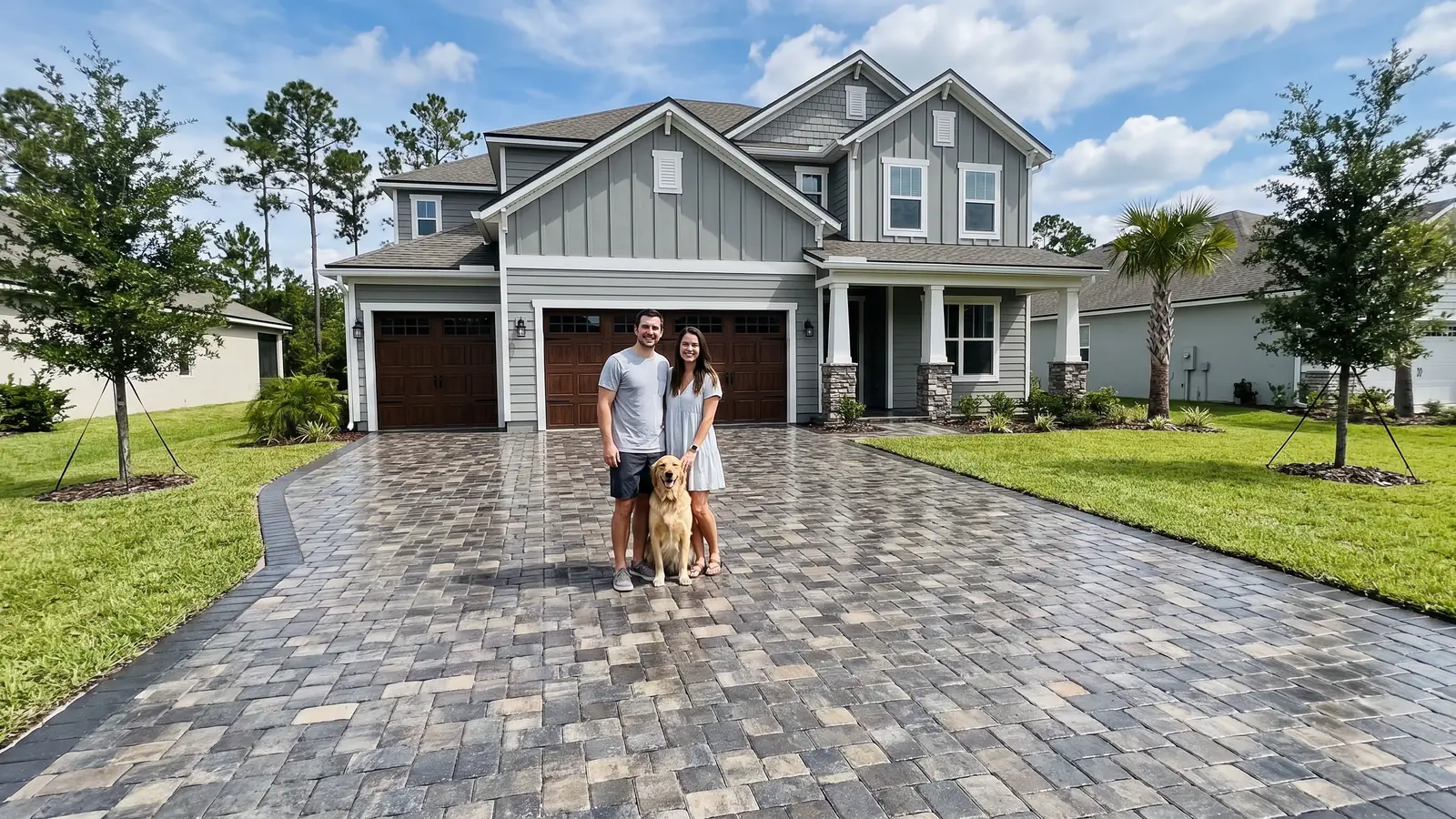
Warm brick color that holds up to Florida weather
Brick Paver Sealing in St. Johns, FL
Ask for a free brick paver sealing estimate in Saint Johns at (904) 552-3813.
- Brings out deeper paver color
- Fresh joint sand helps lock pavers in place
- Gives weeds less room to grow
- Makes the surface easier to keep clean
- Free estimate, no obligation
Request a Free Estimate
Free, no obligation.
Do you seal brick pavers in St. Johns, and how long until someone replies?
A local contractor seals brick pavers in St. Johns, FL, and someone gets back to you within 1 business day, and usually sooner. The estimate is free, and saying no costs nothing. To start, call (904) 552-3813.
Brick has a warmth that gray concrete lacks, and Florida sun, sprinklers and mildew can dull it fast. A careful clean and a matched sealer bring the reds, tans and charcoals forward again and slow the next round of staining. The trick is picking a product that suits brick, because brick drinks in more than concrete does. Tell the contractor what your pavers look like when you request your free quote.
Are my pavers real brick or concrete made to look like brick?
This is the first question a good contractor asks, because the answer sets the sealer. Plenty of pavers sold as brick are concrete molded in a brick pattern, and others are fired clay. To have yours identified, call (904) 552-3813.
Fired clay brick
A masonry products maker says brick varies in porosity and surface, and that a film coating that bonds well to dense block can fail on dusty, open-faced brick. Clay often calls for a penetrating treatment instead. To ask which fits, request your free quote.
Concrete in a brick pattern
Unilock says concrete pavers are porous and can benefit from sealing, and that the sealer should be breathable so moisture can leave and efflorescence does not build under it. To confirm which you have, call (904) 552-3813.
Why the difference shows up fast
Unilock adds that brick pavers tend to be more absorbent than concrete, so the sealer choice matters even more. A wrong match can blotch or peel within a season. To avoid that, request your free quote.
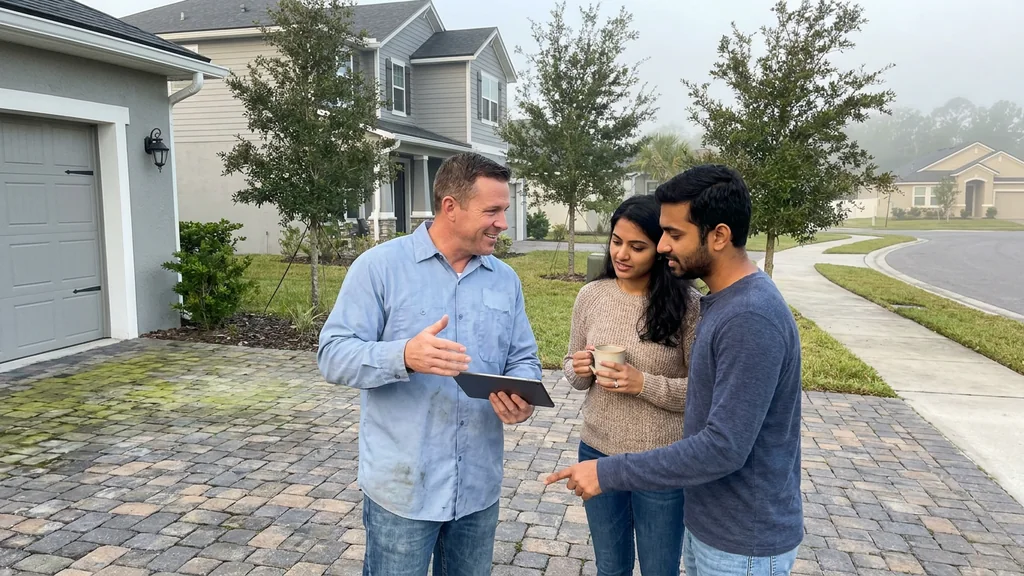
Is sealing brick pavers a good idea in Florida?
It is a reasonable idea when the product matches the brick. Unilock says sealing helps protect from water, stains and fading, and that pool decks and sidewalks with splash and sunscreen gain from added resistance to moisture and mildew. It also says sealing is optional. To see where your brick falls, call (904) 552-3813.
Benefit: stain resistance
Absorbent brick takes up oil, rust and tannin, and a sealer slows that.
Benefit: locked joints
Sealing tightens the joint surface so windblown seeds have fewer places to settle, per Unilock.
Risk: film that peels
A masonry products maker says film-forming coatings can trap vapor and peel over time.
Risk: blotchy color
Sealing damp brick can leave blotches, so drying is checked first.
Which sealer type fits brick pavers?
The two big families are penetrating and film-forming. A masonry products maker describes penetrating products as soaking in and reacting below the surface, while film-forming coatings stay on the surface for gloss or color. For exterior brick it points to siloxane or silane blends, with UV-stable formulas preferred. To talk through which suits yours, request your free quote.
Penetrating sealer
It keeps the look closest to natural and lets moisture vapor out. That breathing matters where moisture is constant. To ask about it, call (904) 552-3813.
Film-forming sealer
It gives the wet look and the most color. It also needs the driest brick and a careful hand, since a trapped film can cloud. A company in St. Augustine says it offers natural, matte, semi gloss and high gloss. To see the sheen levels, request your free quote.
Water-based or solvent-based
The maker notes water-based products tend to emit fewer fumes, while solvent-based ones can penetrate deeper but need more safety care. Unilock says solvent types need perfectly dry pavers and joints. To compare, call (904) 552-3813.
How do white haze and efflorescence show up on brick pavers?
A white or cloudy look on brick has three common causes. Telling them apart decides whether the fix is waiting, washing or stripping. To get a diagnosis, request your free quote.
New pavers: efflorescence
Unilock says this natural salt film fades in typically two to three months, sometimes up to a year, and sealing should wait for it.
Trapped moisture
A St. Augustine company lists white haze from trapped moisture among the problems it removes before resealing.
A failed coat
A St. Johns County patio job showed white staining and delaminating sealer after a poor application, and the old finish had to be stripped before a recoat.
Which St. Johns homes have brick pavers to protect?
ZIP code 32259 counts 23,885 occupied homes, and about 88 percent are owner occupied, the Census figures on zip-codes.com show. Nearby communities are covered too. To check your address, call (904) 552-3813.
How does heat change brick sealing in St. Johns?
Heat is the quiet risk. Action News Jax reported Jacksonville's May 2025 average high at 90.4 degrees, a record, with 19 days at 90 or above. Unilock says sealing pavers that are too hot risks staining and early peeling, and it aims for 50 to 90 degrees. To plan around the weather, request your free quote.
Mornings beat afternoons
A contractor who schedules early or on a cooler day keeps the pavers inside that 50 to 90 degree range. To ask how that is handled, call (904) 552-3813.
Shade changes the clock
Unilock points to slower drying in shaded areas for brick. A patio under oak limbs may need a full day after washing. To plan the visit, request your free quote.
How much does brick paver sealing cost in St. Johns?
No page I read prices brick alone, so the table is built from the pieces a St. Augustine company serving St. Johns County publishes. Washing and sealing together run $1.50 to $3.00 per square foot. A 500 square foot brick patio comes to about $750 to $1,500. For your own number, call (904) 552-3813.
Unilock puts sealer itself at $80 to $150 a gallon. The company's own list names surface type, stains, size, sealer choice and access as price drivers, so brick that needs stain work costs more than a clean patio. To compare a quote, request your free quote.
| Job piece | Rate per sq ft | 500 sq ft | 1,000 sq ft | 1,500 sq ft |
|---|---|---|---|---|
| Basic washing | $0.75 to $1.50 | $375 to $750 | $750 to $1,500 | $1,125 to $2,250 |
| Deep cleaning with stain removal | $1.00 to $2.00 | $500 to $1,000 | $1,000 to $2,000 | $1,500 to $3,000 |
| Standard sealing | $1.25 to $2.25 | $625 to $1,125 | $1,250 to $2,250 | $1,875 to $3,375 |
| Premium color-enhancing sealer | $1.50 to $2.50 | $750 to $1,250 | $1,500 to $2,500 | $2,250 to $3,750 |
| Full washing and sealing package | $1.50 to $3.00 | $750 to $1,500 | $1,500 to $3,000 | $2,250 to $4,500 |
Every rate is from the price table of a St. Augustine company that serves St. Johns County, read in November 2026. Pick the rows that match the work: a clean-only job uses the first two, a seal-only job the next two and a combined job the last row. Paver repairs are not included.
Want a brick paver quote?
Call or send a short request. A contractor gets back to you inside 1 business day, frequently sooner.
Free, no obligation
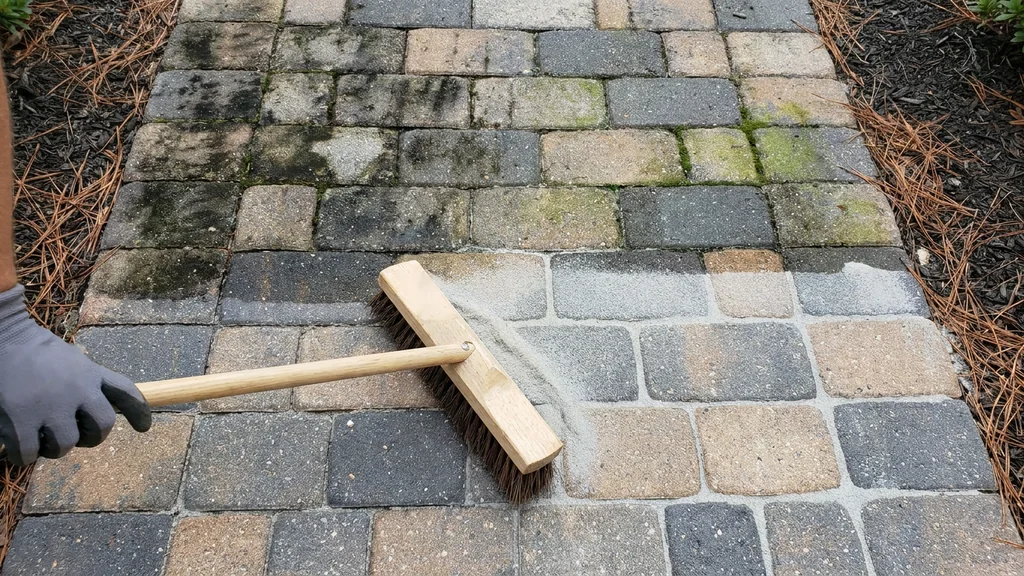
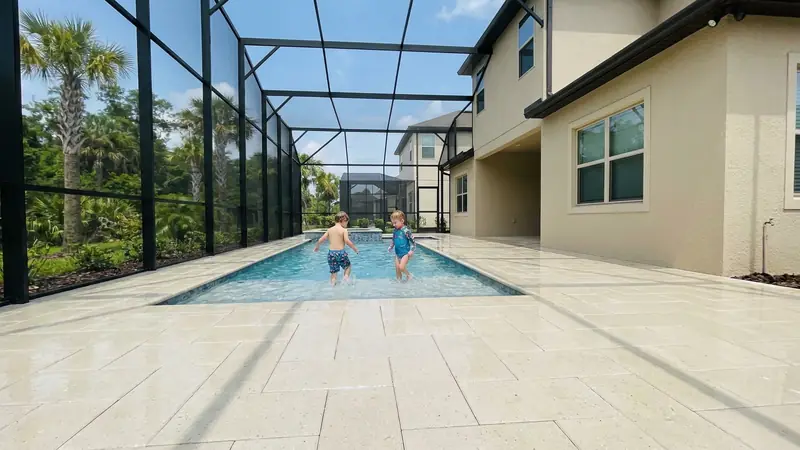
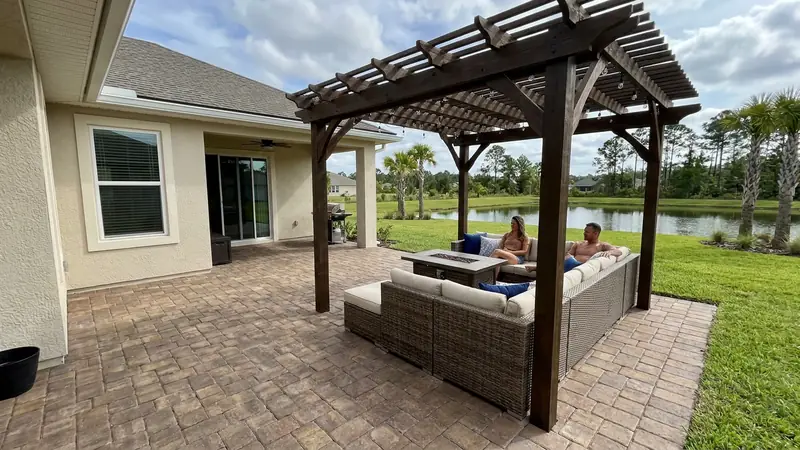
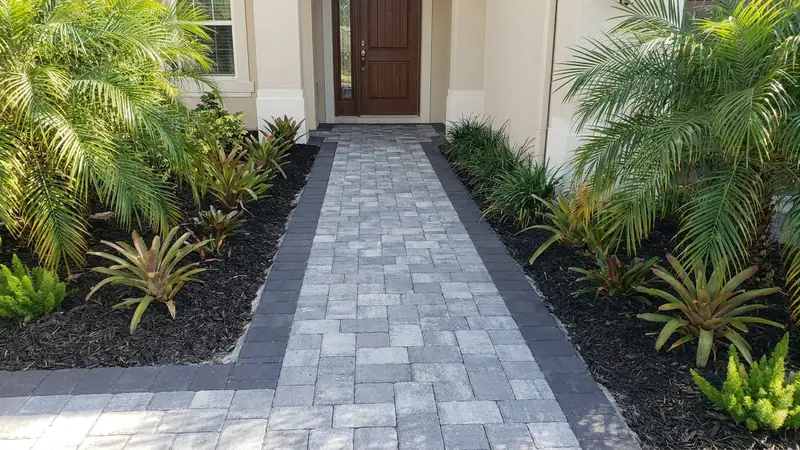
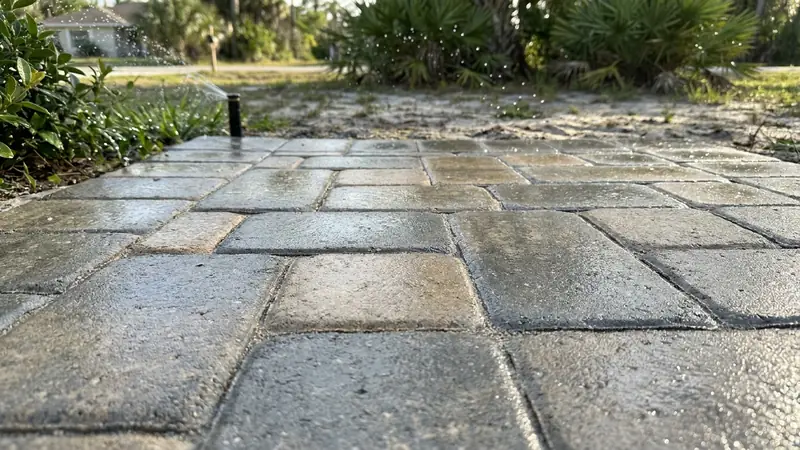
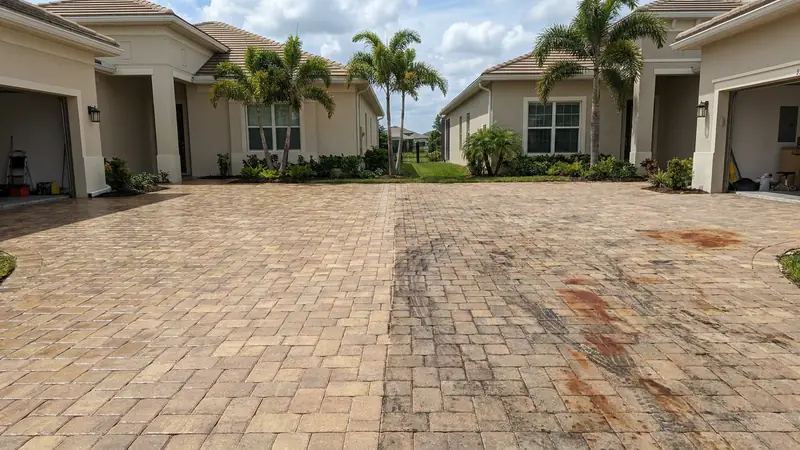
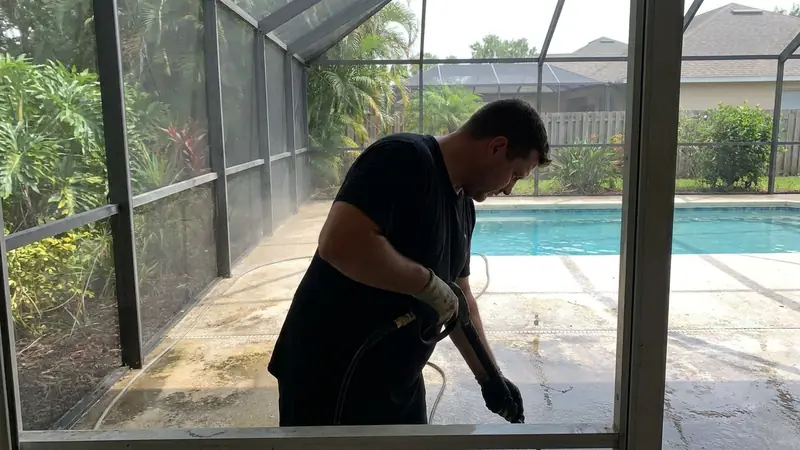
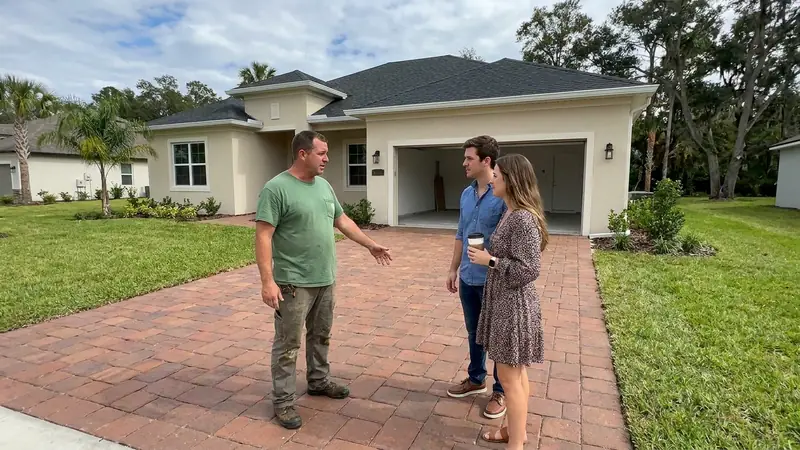
What do sealed brick and paver surfaces look like in St. Johns?
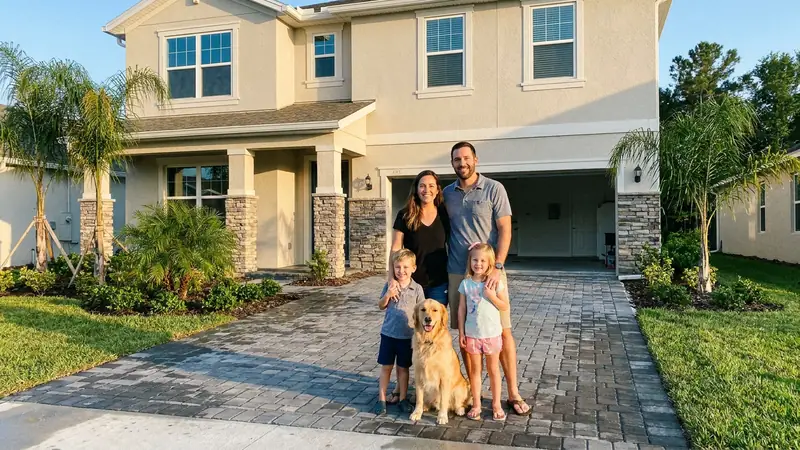
How does a contractor test brick before sealing?
A small test beats a big surprise. The masonry products maker calls a mock-up an effective way to see how brick interacts with the cleaner, the moisture and the product, and Unilock asks for a test in a small corner. To ask for one, call (904) 552-3813.
Pick a hidden spot
A corner out of sight shows color change without risking the front walk.
Let it cure
The patch needs the full dry time before anyone judges it.
Check the sheen
The patch shows whether the finish looks natural or glossy in sun and shade.
Look for haze
A whitish film means moisture or a too-early second coat, per Unilock.
What is the brick paver sealing process from first look to cure?
Brick has its own order of work, and each step guards against a common failure. A contractor can show you the sequence at the estimate. To book it, request your free quote.
1. Identify the material
The contractor tells clay brick from brick-pattern concrete and looks for old sealer or haze.
2. Clean and treat stains
A cleaner suited to algae, rust, tannin or efflorescence goes on, then the surface is washed.
3. Dry completely
Brick is absorbent, so it dries fully, and shaded patios may wait about a day, as Unilock notes.
4. Refill the joints
Joint sand is swept in and settled so the brick locks together again.
5. Test, then seal
A small patch confirms color and sheen before the coat goes on in thin passes.
6. Cure
Sprinklers stay off and weather stays dry while the sealer cures, about 24 to 48 hours.
How often should brick pavers be resealed in St. Johns?
Plan on two to five years. Unilock says three to five, while a company in ZIP 32259 and another working in St. Johns both say every two to three years. Chalky color and sand dropping from the joints say it is time. To have yours judged, call (904) 552-3813.
Signs on brick
Brick that darkens with a drop of water instead of beading has lost its protection. Concrete Network describes the same test for concrete. To get a check, request your free quote.
Brick paver sealing questions, answered
What is the average cost to seal pavers in Florida?
Prices run by region. A St. Augustine company serving St. Johns County publishes $1.50 to $3.00 per square foot for washing and sealing together, and $1.25 to $2.25 for standard sealing alone. Brick that needs stripping or repairs costs more. For a St. Johns number, call (904) 552-3813.
How much does it cost to have your pavers sealed?
At the county rates above, a 500 square foot area comes to about $750 to $1,500 for the full package and a 1,000 square foot area to $1,500 to $3,000. The size, the stains and the sealer type move the total. To get a written price, request your free quote.
Is sealing brick pavers a good idea?
Often yes, with the right product. Unilock says brick pavers are more absorbent than concrete, so a sealer helps with staining, and it suggests a matte or low-gloss finish to keep the natural look. A masonry products maker warns that film coatings can trap vapor and peel on brick. To get a product matched to yours, call (904) 552-3813.
How much does it cost to seal outdoor pavers?
The same per square foot rates apply to any outdoor paver: $0.75 to $1.50 for basic washing, $1.00 to $2.00 for deep cleaning and $1.25 to $2.25 for standard sealing, according to the St. Augustine price table. Brick walks and patios fall inside those ranges. To see where yours lands, request your free quote.
Are my pavers clay brick or concrete made to look like brick?
Many pavers sold as brick are concrete in a brick pattern, and some are fired clay. The two take sealer differently, since a masonry products maker says brick varies in porosity and Unilock says brick is more absorbent than concrete. A contractor checks a sample and tests a small area. To set up that check, call (904) 552-3813.
Will sealer darken my brick pavers?
It can. The masonry products maker says a mock-up shows how brick responds, including darkening or sheen, and Unilock asks for a test in a small corner. Natural-look products change color the least. Ask to see a test patch when you request your free quote.
What does a white haze on brick pavers mean?
Usually moisture or salts. Unilock says efflorescence is a natural salt film that fades over two to three months on new pavers, and a St. Augustine company says white haze can also be trapped moisture or a coat applied wrong. A haze under a failed coat means stripping. To have yours looked at, call (904) 552-3813.
Does brick need a different finish than concrete pavers?
Often a quieter one. Unilock says brick pavers often need a matte or low-gloss finish to keep their natural look, and the finish should be picked with slower drying in shaded areas in mind. A company working in St. Johns offers gloss, matte and natural finishes. To compare, request your free quote.
How long does a sealer last on brick pavers in St. Johns?
Unilock says three to five years for pavers in general, and a company in ZIP 32259 says two to three years in Northeast Florida. Sun, sprinklers and foot traffic decide where a patio falls in that range. To plan for yours, call (904) 552-3813.
Can brick pavers be sealed right after installation?
Not right away. Unilock says to hold off until efflorescence is completely gone, typically two to three months and sometimes up to a year, so a haze does not end up under the coat. Cleaning comes first. To find out if yours is ready, request your free quote.
Why does sealing damp brick go wrong?
The masonry products maker says sealer on damp brick can block penetration and leave blotches or discoloration. Unilock says the same about residual moisture causing cloudy results. In a humid county that is why the drying check matters. To ask how drying is judged, call (904) 552-3813.
Other paver services in St. Johns
Brick is often one of several surfaces at a home. These pages cover the rest, or call (904) 552-3813.
Get your free brick paver estimate
One short request starts it, with a reply due inside 1 business day and often earlier.
Free, no obligation