
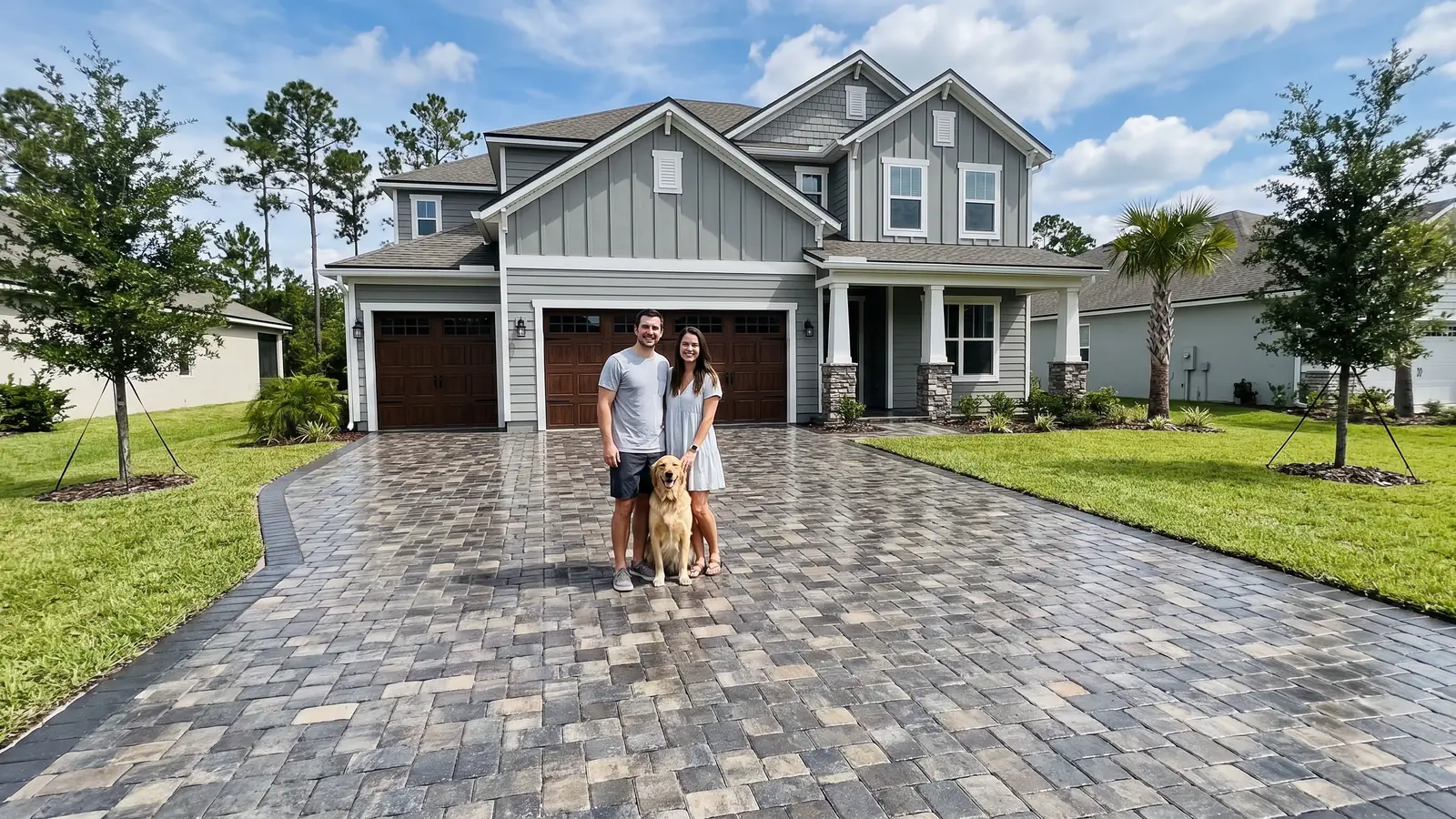
Lift rust, oil and green film off your pavers
Paver Stain Removal in St. Johns, FL
Rust, oil and green stains can leave your pavers, so call (904) 552-3813 for a free estimate.
- Brings out deeper paver color
- Fresh joint sand helps lock pavers in place
- Gives weeds less room to grow
- Makes the surface easier to keep clean
- Free estimate, no obligation
Request a Free Estimate
Free, no obligation.
Can a contractor remove the stains on my St. Johns pavers?
Yes, a local contractor treats rust, oil, tannin and green film on pavers throughout St. Johns, FL, and a reply comes within 1 business day, usually much sooner. The estimate is free and you are free to decline. To describe your stains, call (904) 552-3813.
A bright orange fan across the driveway, a dark patch where the car sits, a brown shadow under the oak: each one has its own cause and its own treatment. Finding the cause first is what keeps the mark from returning, and it tells the contractor which product to try. Take a photo of the worst spot, since it helps the contractor plan, and request your free quote.
Which kind of stain is on my pavers?
Six marks cover most of what St. Johns homeowners see on pavers, and each calls for a different approach. Match yours below, then call (904) 552-3813 to have it treated.
Orange and rust marks
Iron from sprinkler water, fertilizer granules or metal furniture. This is the stain most tied to Florida well water.
Oil, grease and tire marks
Garage aprons and parking spots collect these. Fresh oil lifts far more easily than oil that has had weeks to soak in.
Brown tannin and leaf stains
Leaves and acorns under oaks leave brown shadows that spread after rain.
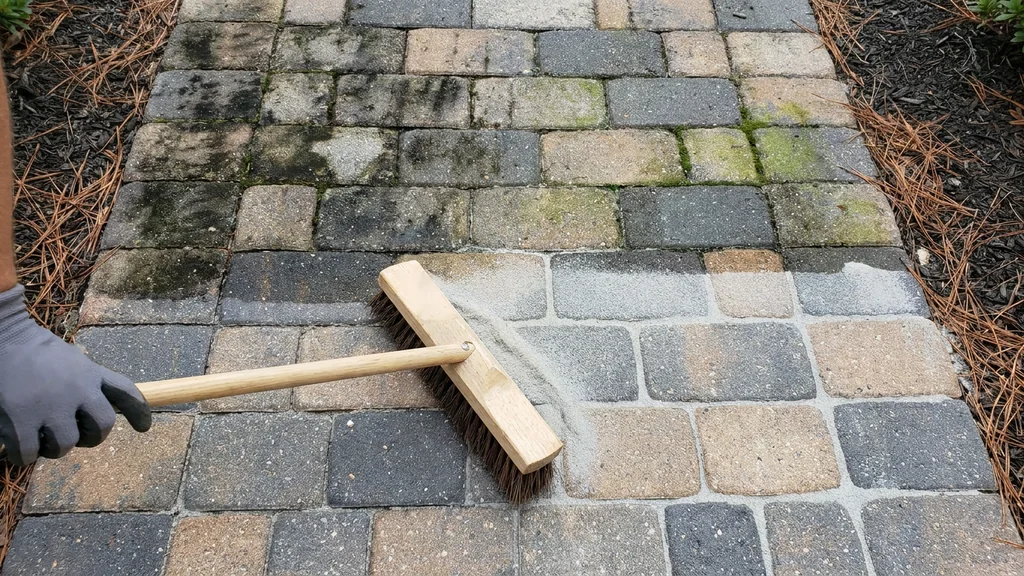
Green algae and mildew
Shade, humidity and slow drying feed a green or black film, a particular problem on slick pool decks.
White haze
Efflorescence is a powdery white deposit on newer pavers. Unilock says it fades with time and rainfall.
Paint, gum and hard water marks
A St. Johns County sealing company lists these among the marks it treats alongside rust and oil.
Why do St. Johns pavers pick up so much rust?
Sprinkler water carries iron
A UF/IFAS page states that most Florida well water is high in iron, which leaves rust on whatever it contacts. Spray that lands on a driveway dries into orange streaks. To have yours treated, call (904) 552-3813.
Overshoot is the number one cause
A Northeast Florida stain company calls sprinklers that overshoot the lawn the number one cause of orange and brown streaks on concrete. Turning the heads in from the pavers is the first fix. Tell the contractor where the spray lands when you request your free quote.
Fertilizer and furniture add marks
The same company lists iron containing fertilizer granules and rusty furniture legs, planters and grills as other sources. Pads under metal feet help. To sort out which one made your mark, call (904) 552-3813.
Filters treat the water itself
UF/IFAS lists water softeners, oxidizing filters and combined chlorination and filtration as ways to cut excess iron. A filter on the irrigation line is a bigger project than a stain visit. To ask what fits your setup, request your free quote.
What about oil, grease and tire marks?
Speed matters with oil
Unilock says to clean food and oil spills quickly with soap and water or a mild detergent so they do not set. A Northeast Florida stain company agrees fresh oil responds best, though older stains can often be improved. For a driveway spot that has been there a while, call (904) 552-3813.
Porous surfaces hold on
A Florida stone company says oil, grease and rust are hard to remove once they are absorbed into porous surfaces. Concrete pavers are porous too. That is why a contractor pre-treats before washing. To have a spot checked, request your free quote.
Do oak trees leave stains on St. Johns pavers?
Leaves leave brown shadows
Unilock advises sweeping or blowing leaves off pavers regularly so stains cannot soak in, and says leaf stains lift with warm water, soap and a stiff brush. Heavy or old marks need more than that. To ask about brown patches under a tree, call (904) 552-3813.
Shade feeds green growth
A St. Augustine power washing company says shaded properties with mature landscaping build mold and algae faster, and that humid air makes surfaces slippery. A yard with big trees fits that description. Share where the shade falls when you request your free quote.
What is the paver stain removal process?
A stain visit follows a clear order, and rushing any step lowers the result. A Northeast Florida stain company stresses that chemical dwell time matters. To walk through that order on your driveway, call (904) 552-3813.
1. Identify the stain
Rust, oil, tannin and algae each need a different product, so the contractor reads the mark before choosing.
2. Test a small area
The treatment goes on a hidden corner first, since surface type changes strength and dwell time.
3. Pre-treat the mark
A stain specific product goes on and is given the time it needs to work.
4. Wash at low pressure
Unilock advises a low setting and about a 45 degree angle so joint sand stays in place.
5. Refill and review
Fresh sand goes in when the surface is dry, and the contractor shows you what lifted and what faded.
How much does paver stain removal cost in St. Johns?
A St. Augustine company serving St. Johns County lists $1.00 to $2.00 per square foot for deep cleaning with stain removal, against $0.75 to $1.50 for a basic wash. A St. Augustine power washing company lists $200 to $600 for heavily stained or moldy concrete. For a figure on your own pavers, request your free quote.
Oil, mildew, rust and algae need pre-treatment, and that company says it raises the cost. A sealer afterward is priced separately, at $1.25 to $2.25 for standard sealing in the same table. To plan both together, call (904) 552-3813.
| Paved area | Basic wash | Deep clean and stain removal | Stain removal plus standard sealer |
|---|---|---|---|
| 300 sq ft | $225 to $450 | $300 to $600 | $675 to $1,275 |
| 600 sq ft | $450 to $900 | $600 to $1,200 | $1,350 to $2,550 |
| 1,000 sq ft | $750 to $1,500 | $1,000 to $2,000 | $2,250 to $4,250 |
Rates are the per square foot ranges a St. Augustine company serving St. Johns County published, read in November 2026. The last column adds its standard sealing range of $1.25 to $2.25. These are sums of published ranges, not a quote, and local bids will vary.
Which St. Johns County towns can get stain removal?
Homeowners in St. Johns and the towns below can ask for a free price, and every town has its own page. If you are not sure your street is covered, call (904) 552-3813.
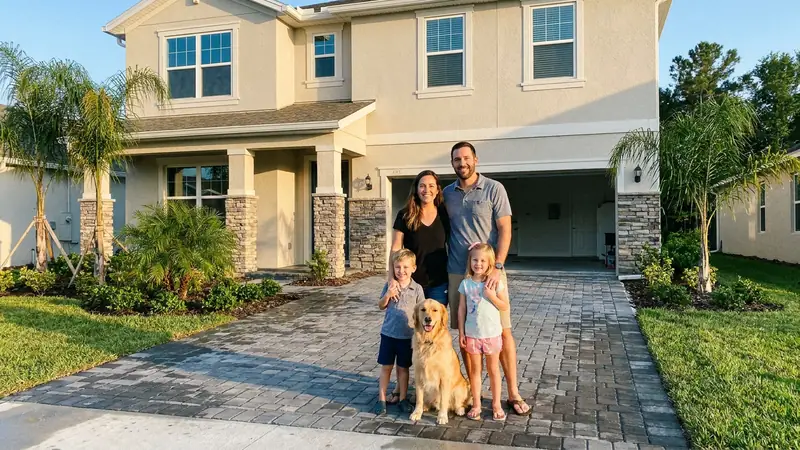
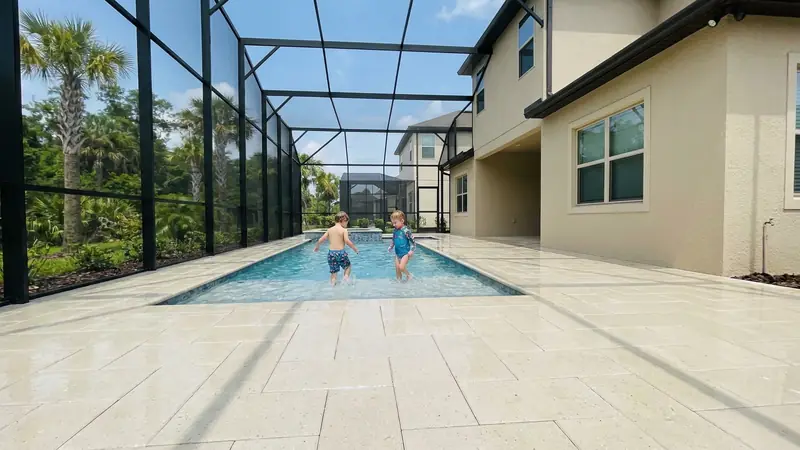
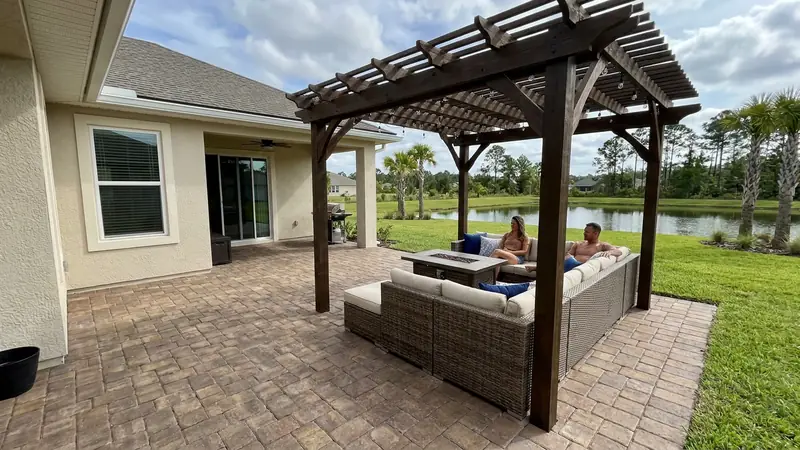
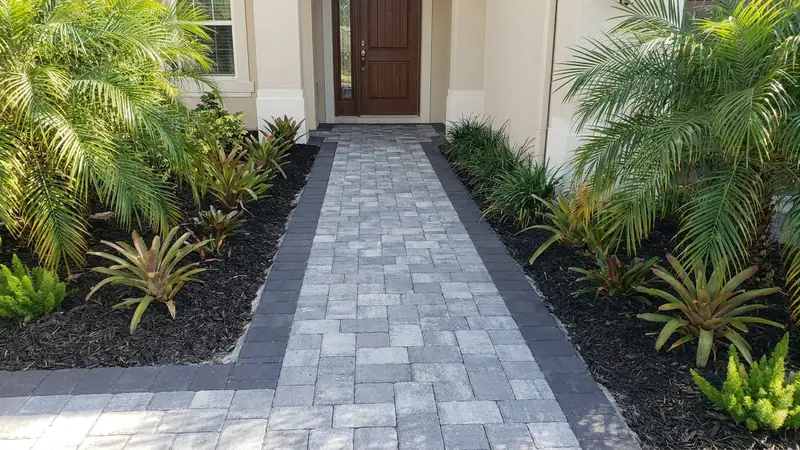
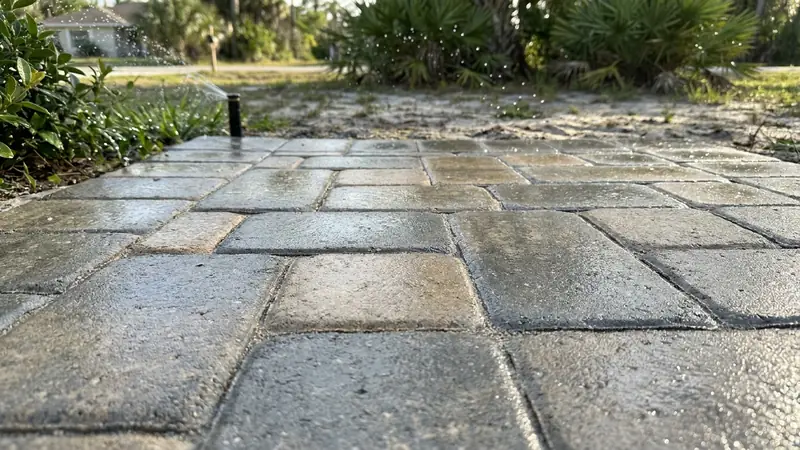
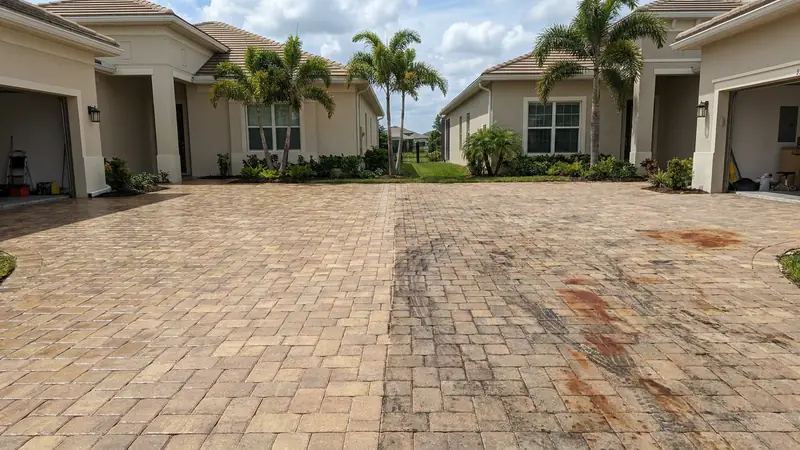
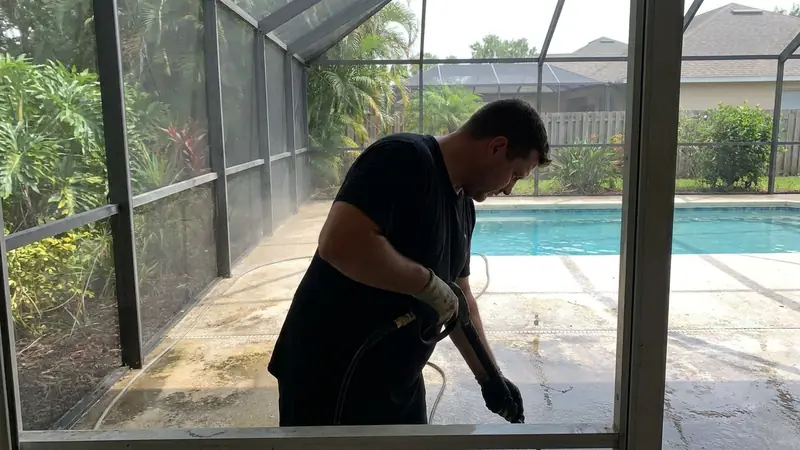
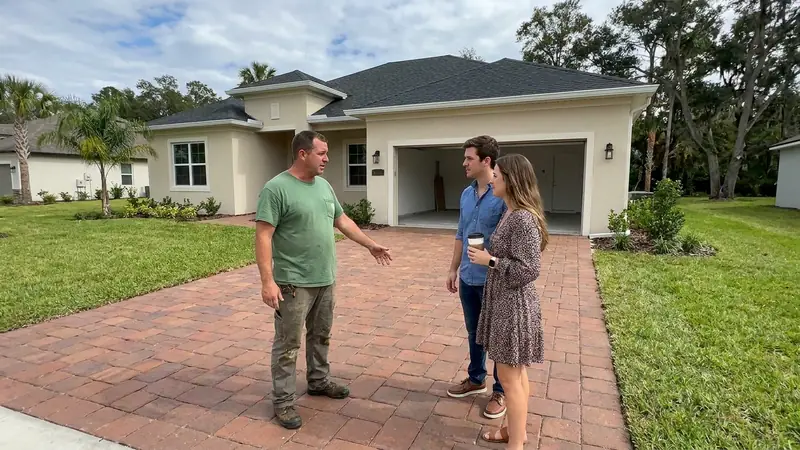
What do pavers look like after stain removal in St. Johns?
Will the stain come back, and does sealing help?
Stains return when the source stays
A Northeast Florida stain company says stains come back unless the cause is addressed, whether that is sprinkler overspray, iron fertilizer or metal furniture. Fixing the cause costs far less than repeat treatments. To talk it through, call (904) 552-3813.
A penetrating sealer helps afterward
That company says a penetrating sealer after removal creates a barrier, so future stains are easier to clean before they bond, without claiming sealing prevents stains. Unilock calls sealing optional on its own pavers. To price a coat, request your free quote.
Can pressure alone lift a stain?
More force is not the answer
Unilock warns that high pressure can dislodge joint sand and advises a low setting. A St. Johns County sealing company says stubborn grease, rust and hard water marks get specialized pre-treatment to lift them. To ask about the right method, call (904) 552-3813.
Newer pavers may only need time
A powdery white deposit on pavers a few months old is probably efflorescence, which Unilock says appears after installation and fades. Treating it too early can waste money. To have a contractor tell the difference, request your free quote.
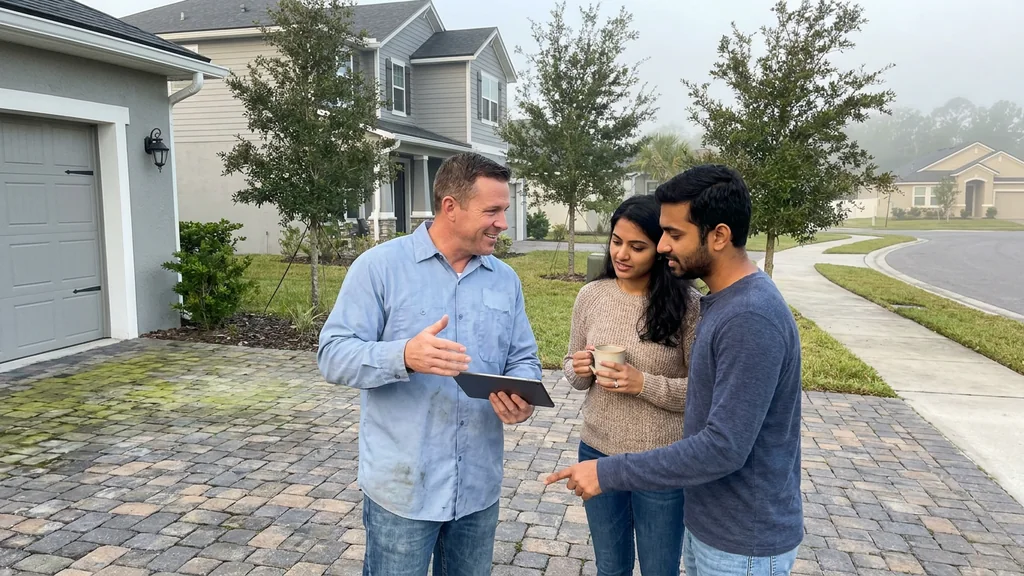
Where do stains show up most around a St. Johns home?
Stains gather where water, cars and shade meet the pavers, and a contractor starts at those spots. To have yours checked, call (904) 552-3813.
Garage aprons
Oil drips, tire marks and sprinkler rust all land here, so the apron usually needs the most work.
Pool decks
Sunscreen, algae and sand loss collect around the pool, and a slick deck is a safety issue.
Entry walks
Planters, mulch and metal furniture leave rings and brown runoff beside the front door.
Lanais under cover
Shade and slow drying let green film and mildew settle on the pavers.
What should I tell the contractor about a stain?
When it first showed up
A mark that appeared after a spill or a storm tells the contractor what it is. Fresh oil and rust respond better than marks that have soaked in for months. To share the timeline, call (904) 552-3813.
What sits nearby
Sprinkler heads, iron fertilizer, metal furniture and big trees all point to a cause. Naming them saves guesswork. To list what is near the stain, request your free quote.
Whether the pavers are sealed
Sealed pavers resist soaking in, and unsealed ones hold stains deeper. A contractor needs to know which you have before choosing a product. Share the last sealing date when you call (904) 552-3813.
What are St. Johns homeowners asking about paver stains?
How can I remove stains from my pavers?
The method depends on the stain, which is why a contractor identifies it first. A St. Johns County sealing company lists rust, irrigation buildup, hard water marks, oil and grease, gum, paint and fertilizer among the stains it treats. Stubborn marks get a pre-treatment made for that stain before any washing.
Which paver sealer is best for Florida?
Ask the contractor for the product name and why it suits your pavers. A Northeast Florida stain company says a penetrating sealer applied after stain removal creates a barrier, so later stains are easier to clean before they bond. It does not claim sealing prevents stains.
Why is paver sealing so expensive?
Prep takes the time. A Jacksonville 2026 guide says quotes under $1 per square foot usually mean prep steps are skipped, and heavy oil, algae or efflorescence lengthens the clean. A stained driveway can cost more than a clean one.
Can I use Dawn dish soap to clean my pavers?
Unilock names soap and water or a mild detergent for fresh spills such as oil, so it can help on light, new marks. It will not lift set rust or old oil, and a contractor matches the product to the stain. Test any product on a hidden spot first.
What causes orange stains on St. Johns pavers?
Usually iron. UF/IFAS says most Florida well water is high in iron, and a Northeast Florida stain company calls overshooting sprinklers the number one cause of orange and brown streaks. Iron fertilizer and rusty furniture legs leave marks too.
Does bleach remove rust from pavers?
No. A Northeast Florida stain company says bleach adds oxygen to the iron and makes the stain darker and harder to remove. It names oxalic acid and a fluoride based remover as products that lift iron, with dwell time set by the surface.
How much does paver stain removal cost in St. Johns?
A St. Augustine company serving St. Johns County lists deep cleaning with stain removal at $1.00 to $2.00 per square foot, and a St. Augustine power washing company lists $200 to $600 for heavily stained or moldy concrete. A basic wash is $0.75 to $1.50 per square foot at the first company.
Can oak tannin stains be removed from pavers?
Usually, yes. Leaf stains respond to scrubbing with soap and a stiff brush, according to Unilock, while old brown tannin may need a stronger treatment from a contractor. Sweeping or blowing leaves off regularly keeps stains from soaking in.
How long does a stain treatment visit take?
A St. Johns cleaning company says most paver cleaning only jobs take 2 to 3 hours. Heavy stains and dwell times can add to that. A sealer afterward needs the pavers fully dry first.
Will the stains come back after treatment?
They can if the source stays. A Northeast Florida stain company says stains return unless the iron source is fixed, such as sprinkler overspray, iron fertilizer or metal furniture legs. A penetrating sealer afterward makes later stains easier to clean but does not stop them.
Ready to clear those stains?
Call or send a quick note with a photo of the worst spot, and a reply follows within 1 business day, usually much sooner.
Free, no obligation