
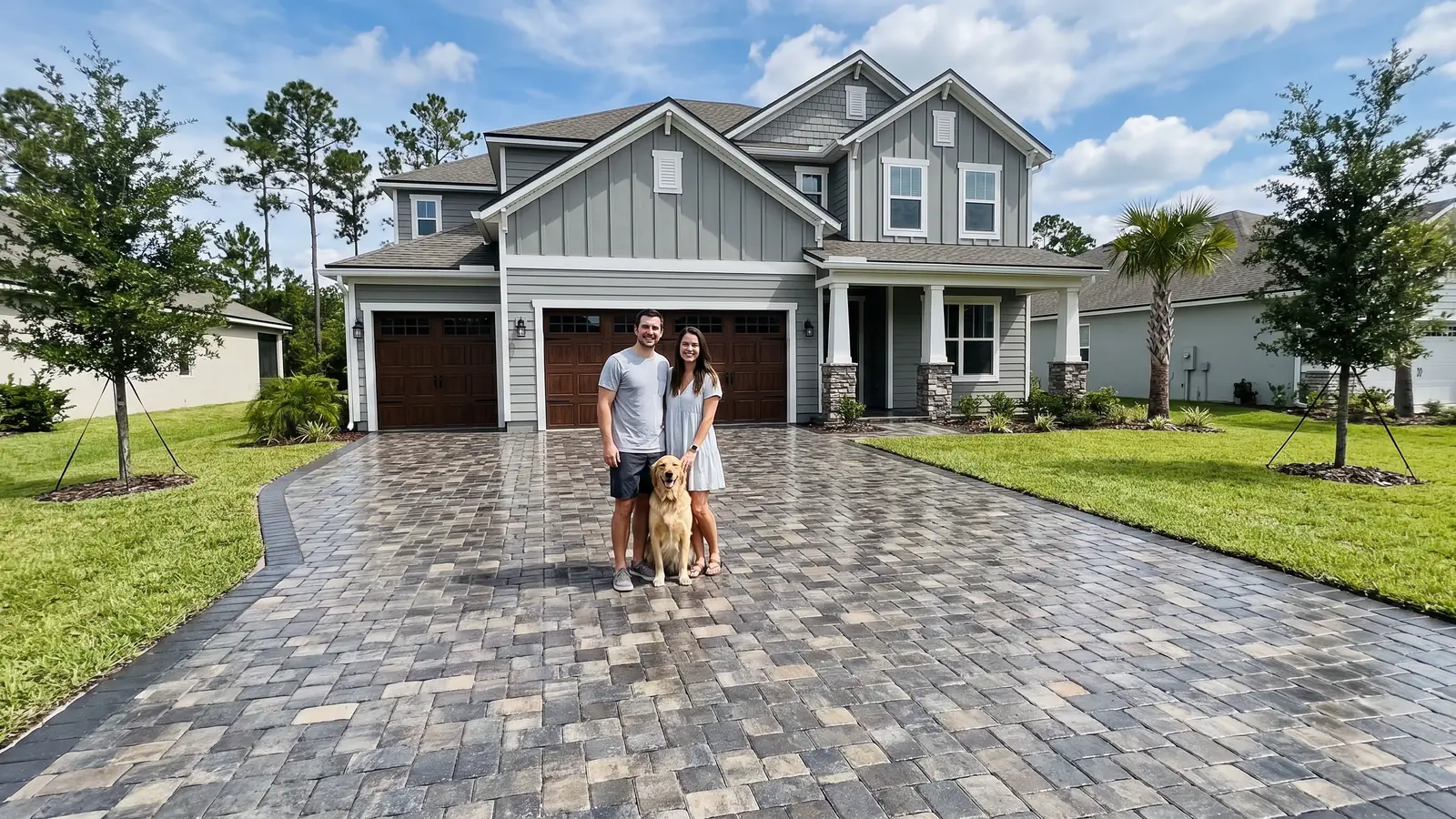
A clean start for peeling, hazy or sunken pavers
Paver Restoration and Resealing in St. Johns, FL
Peeling, hazy or sunken pavers can look new again, so ask for a free quote at (904) 552-3813.
- Brings out deeper paver color
- Fresh joint sand helps lock pavers in place
- Gives weeds less room to grow
- Makes the surface easier to keep clean
- Free estimate, no obligation
Request a Free Estimate
Free, no obligation.
How soon can someone restore my tired St. Johns pavers?
A local contractor can restore and reseal pavers anywhere in St. Johns, FL, and a reply arrives within 1 business day, often well before that deadline. The first look is free, carries no obligation and shows you which fix fits your surface. To start, call (904) 552-3813.
Restoration is for pavers that have gone past a simple wash: sealer turned white and flaky, joints sitting low, a corner that has settled. The goal is a surface that looks and behaves like new, with sand packed tight and a fresh coat bonded to clean pavers. Describe what you see when you request your free quote.
Should I reseal, restore or rebuild?
Four paths cover most St. Johns pavers, and the right one depends on what the surface looks like today. A contractor sorts this out at the first visit. To start that conversation, call (904) 552-3813.
Reseal only
The old coat is thin but clear. The pavers get cleaned, new sand goes in and a fresh coat follows. Unilock puts aftermarket sealer on a 3 to 5 year clock.
Strip and reseal
The coat is white, hazy or flaking. A 2026 Jacksonville guide says old sealer in that state has to come off first, adding $0.75 to $1.50 per square foot.
Lift and reset
Washout, settling or trip hazards mean the base needs work. A Jacksonville paver company lifts and resets pavers, rebuilds base material and compacts the repair.
Replace a section
Only badly failed areas need new pavers. Ask what share of the surface is beyond repair before agreeing to a tear out.
How can I tell the sealer has failed?
Look at the surface after a dry spell and again after rain. These are the signs that point to stripping rather than a quick recoat. If you want a contractor to check what you are seeing, call (904) 552-3813.
- White, milky patches that stay after the pavers dry
- Flakes or peeling edges you can lift with a fingernail
- A hazy or sticky film where the color used to look deep
- Water that darkens the pavers instead of beading up
- Joints that have sunk below the paver faces after storms
Why can't a new coat just go over a white, peeling one?
A weak base for new sealer
PaverGuard, a company that works in St. Johns County, says once a sealer turns white and starts to delaminate, simply applying a new coat will not bond properly. The new film peels along with the old one. To avoid paying twice, request your free quote.
Wet pavers trap moisture
The same project page has the contractor rinse away the cleaners and let the area dry fully, so moisture is not sealed under the new finish. Skipping that wait is how milky patches come back. To plan around a dry week, call (904) 552-3813.
Poor application is a common cause
That project began with a sealer that failed after an improper application, in a patio enclosure inside the county. Strip, clean and recoat fixed it. Ask a contractor how many coats go on and how moisture gets checked when you request your free quote.
What is the paver restoration process, in order?
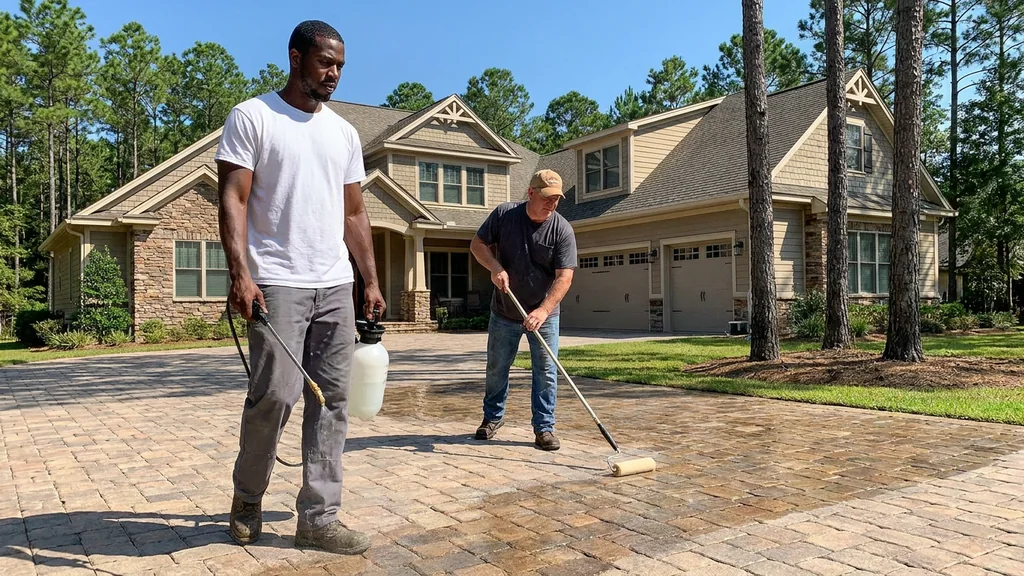
Restoration runs in a set order, because each step prepares the next. Skipping one tends to show up within a season. To see how the order applies to your pavers, call (904) 552-3813.
Inspect the surface
The contractor notes sunken areas, broken pavers, failed sealer, stains and standing water.
Strip the old coat
A stripper loosens the failed film so it lifts away, as the PaverGuard project describes.
Clean and rinse
Residue comes off with a surface cleaner or a gentle wash, since Unilock advises low pressure at about 45 degrees.
Reset and refill
Low pavers are lifted and reset, then joints are refilled with sand once everything is dry.
Dry fully
The surface is allowed to dry completely before any new coat, so no moisture is trapped.
Seal and walk through
The new coat goes on evenly, and the contractor reviews coverage and keep off times with you.
What do washout, settling and joint sand loss mean for restoration?
Washout under the pavers
Paver Pro Jax, a Jacksonville company, describes fixing washout and settling by lifting pavers, rebuilding damaged base and compacting the repaired area. Sealer cannot fix a low spot, only the base can. To have a low spot checked, call (904) 552-3813.
Trip hazards come first
Raised edges and sunken pavers are corrected before any coating goes on, since sealing over them locks the problem in. A contractor can flag these at the first visit. For a safety check on your walk, request your free quote.
Fresh joint sand locks it together
A Jacksonville guide prices re-sanding at $0.25 to $0.75 per square foot, and Unilock says to sweep new sand in only when the surface is completely dry. Full joints keep pavers from shifting. To add sand to your quote, call (904) 552-3813.
How much does paver restoration cost in St. Johns?
No company publishes a single restoration price, so this table adds published pieces together. A St. Augustine company serving St. Johns County lists $1.25 to $2.25 per square foot for standard sealing, and a 2026 Jacksonville guide adds $0.75 to $1.50 for stripping and $0.25 to $0.75 for new joint sand. For your exact total, request your free quote.
That same Jacksonville guide says natural stone, brick and difficult access raise the price, and that heavy algae, efflorescence or oil can lengthen the clean. Base repair has no published price. Ask about it when you call (904) 552-3813.
| Paved area | Strip old sealer | New joint sand | Standard sealer | All three |
|---|---|---|---|---|
| 300 sq ft | $225 to $450 | $75 to $225 | $375 to $675 | $675 to $1,350 |
| 600 sq ft | $450 to $900 | $150 to $450 | $750 to $1,350 | $1,350 to $2,700 |
| 1,000 sq ft | $750 to $1,500 | $250 to $750 | $1,250 to $2,250 | $2,250 to $4,500 |
Stripping and sand rates come from a Jacksonville 2026 guide, and the sealer rate from a St. Augustine company serving St. Johns County, read in November 2026. Cleaning is bundled into a full service in that guide. These are sums of published ranges, not a quote.
Which St. Johns County towns can get a restoration quote?
Homeowners in St. Johns and the towns below can ask for a free look, and each has its own page. If you are not sure about your street, call (904) 552-3813.
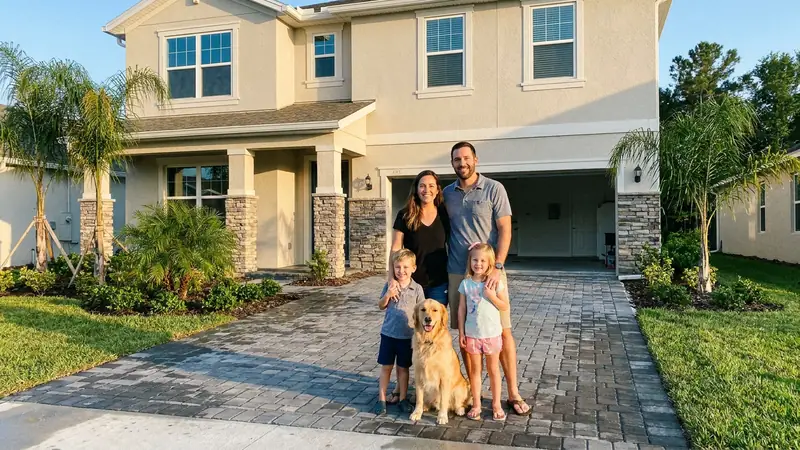
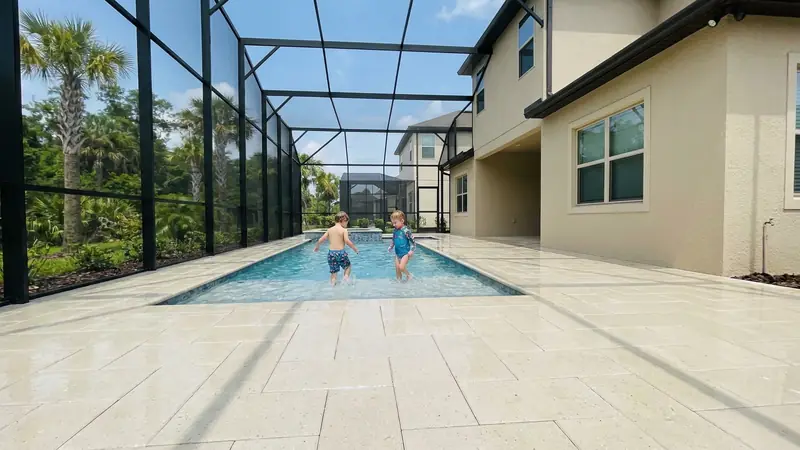
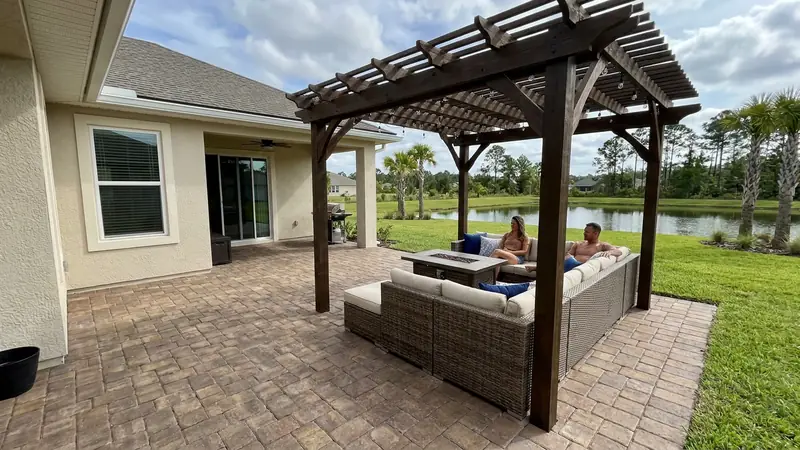
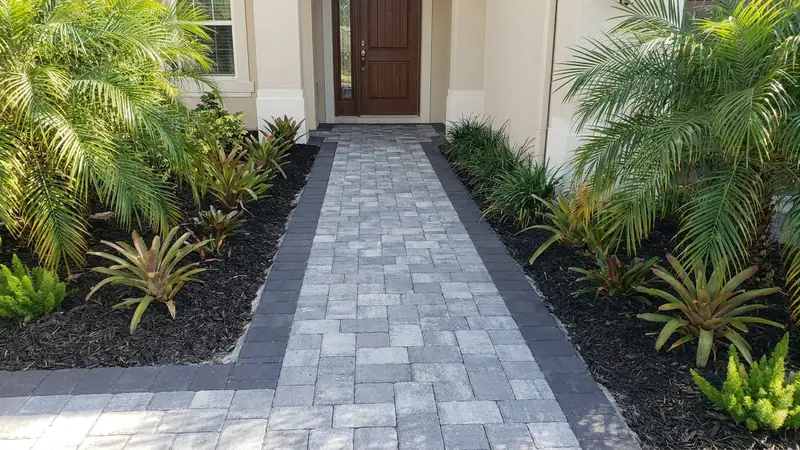
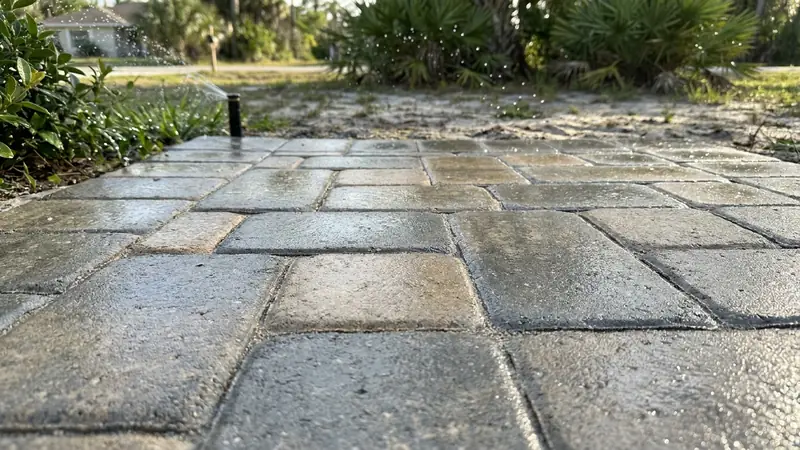
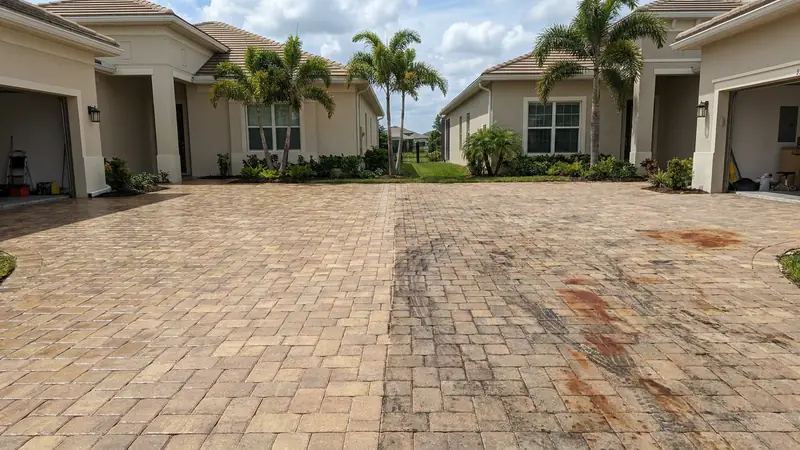
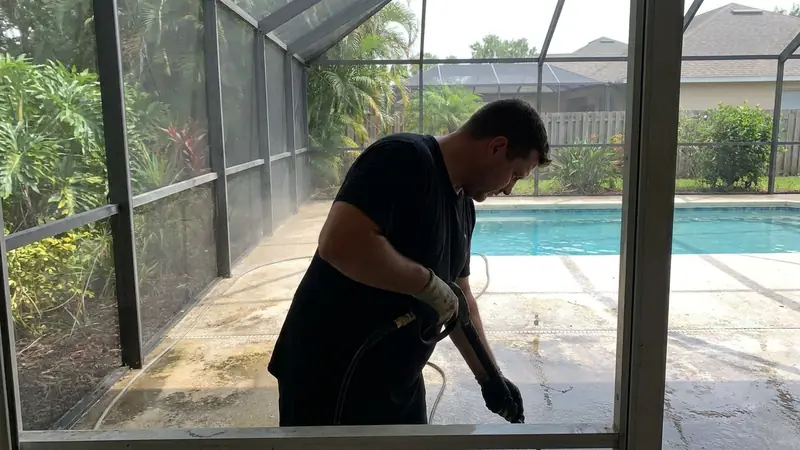
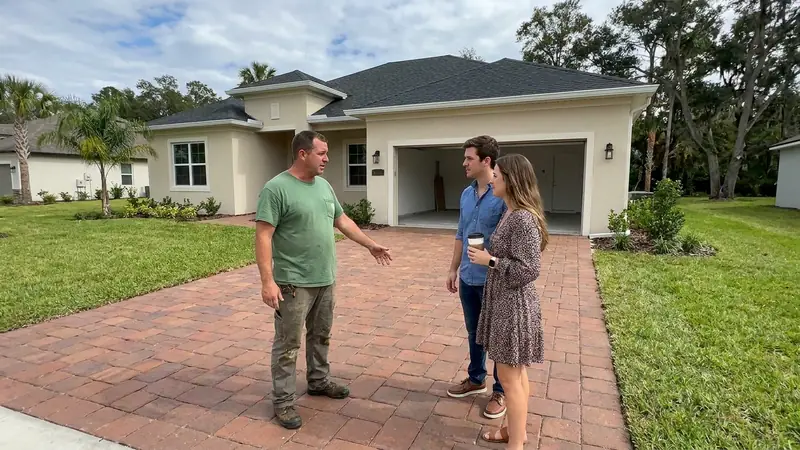
What do restored pavers look like in St. Johns?
What do St. Johns conditions do to a restored surface?
Sun and summer rain
Florida sun, rain, humidity and irrigation all wear on a finish, as a Jacksonville area company notes. A restored driveway still faces the same weather.
Sprinkler overspray
Iron in well water leaves orange marks, says UF/IFAS. Aiming heads off the pavers protects a fresh coat.
Heavy parking and turning
Tires wear the driveway coat first, which is why a Jacksonville guide puts driveways nearer 3 years and shaded walks nearer 5.
New neighborhood haze
A St. Johns cleaning company lists projects in Durbin Crossing, RiverTown, Shearwater and Julington Creek Plantation. Newer homes in neighborhoods like these may carry construction residue before the first wash.
How long will restored pavers last, and when can I drive on them?
Plan on three to five years
Unilock puts aftermarket sealer at 3 to 5 years, and a Jacksonville guide says driveways and pool decks lean toward 3. A yearly cleaning, which a sealing company in the county says extends the coat, keeps it nearer the long end. To set a care schedule, call (904) 552-3813.
Keep off times depend on weather
A Jacksonville restoration company lists about 1 day of work for a driveway and 2 for a pool deck, then cure time before heavy use. Ask for the product's data sheet and keep sprinklers off until then. To pick a good week, request your free quote.
Which surfaces around the house can be restored?
Any paved area with failed sealer or settled pavers qualifies, though each wears in its own way. To start with the one that bothers you most, request your free quote.
Driveway aprons
Tires turn on the apron, so the coat thins first there and joints loosen under the wheels.
Pool decks
Splash and bare feet are hard on a coat, and a pool deck that has lost its sand needs it back before sealing.
Lanais and patios
Covered seating stays damp, which is when peeling sealer turns milky.
Entry walks
A short front walk is often the quickest restoration and the one every visitor sees.
Does color or an HOA rule matter before restoring?
A new coat can shift the tone
Color enhancing sealers darken pavers on purpose, so a restored surface may look richer than the day you sealed it last. Ask for a test spot in a corner before the whole area is done. To arrange one, call (904) 552-3813.
Associations may want a look
Many St. Johns County homes sit in associations, and a move from a natural look to high gloss is the kind of change a board may review. Check the rules, then pick the finish. To talk through finishes, request your free quote.
What are St. Johns homeowners asking about paver restoration?
Which paver sealer is best for Florida?
It depends on the pavers and how you want them to look, so ask for the product name and data sheet. Contractors here use water based and two part urethane film sealers on concrete pavers, and a penetrating type on natural stone. A wet look costs more than a natural look.
How to clean dirty pavers?
A contractor treats the problem spots first, then washes with a surface cleaner or a low setting at a shallow angle so the joint sand stays put. Unilock suggests keeping pressure low and holding the wand at about 45 degrees. Fresh sand goes in once the surface is completely dry.
Why is paver sealing so expensive?
Prep takes up most of the price, and the coat is the smaller part. A 2026 Jacksonville guide says quotes under $1 per square foot usually mean prep steps are skipped, that small jobs cost more per square foot, and that old sealer removal adds $0.75 to $1.50. Natural stone, brick and tight access push the number up further.
How much should I pay for paver sealing?
A St. Augustine company serving St. Johns County lists $1.50 to $3.00 per square foot for washing and sealing, and a Jacksonville 2026 guide lists $1.25 to $3.25. Stripping adds $0.75 to $1.50 and new joint sand adds $0.25 to $0.75 per square foot in that guide. An 800 square foot driveway lands near $1,200 to $2,400 at the county rate.
How do I know my St. Johns pavers need restoring, not just resealing?
White, hazy or flaking sealer points to restoration, along with joints that have washed low and corners that have sunk. A Jacksonville guide says old sealer in that condition has to come off. A coat that is only worn thin can usually be cleaned and renewed.
Can new sealer go over peeling sealer?
No. A paver company on a St. Johns County patio project says that once sealer turns white and starts to delaminate, a new coat will not bond properly. The old film is stripped, the pavers are cleaned and rinsed, and the area dries fully first.
How long does paver restoration take for a driveway?
A Jacksonville restoration company lists about 1 day for a driveway and about 2 days for a pool deck, and says work often starts 1 to 2 weeks after a proposal is accepted. Weather changes the schedule. Repairs to the base add time.
How often should restored pavers be cleaned and resealed?
A St. Johns cleaning company suggests cleaning every 1 to 2 years and cleaning plus sealing every 2 to 3 years, while Unilock puts aftermarket sealer at 3 to 5 years. A sealing company in the county says an annual cleaning extends the life of the coat. Sun and traffic decide where you land.
Will restoring my pavers change their color?
It can. A color enhancing sealer darkens pavers on purpose, and a wet look coat deepens the tone more than a natural look coat. Ask the contractor to test a small corner so you see the result before the whole area is done.
Do lifted and reset pavers need new sand?
Yes. After pavers are reset and compacted, the joints are refilled. A Jacksonville guide prices re-sanding at $0.25 to $0.75 per square foot, and Unilock says to sweep fresh sand in only after the surface is completely dry.
Want your pavers to look new again?
Phone or send a short note about what you see, and a reply comes within 1 business day, usually much sooner.
Free, no obligation