
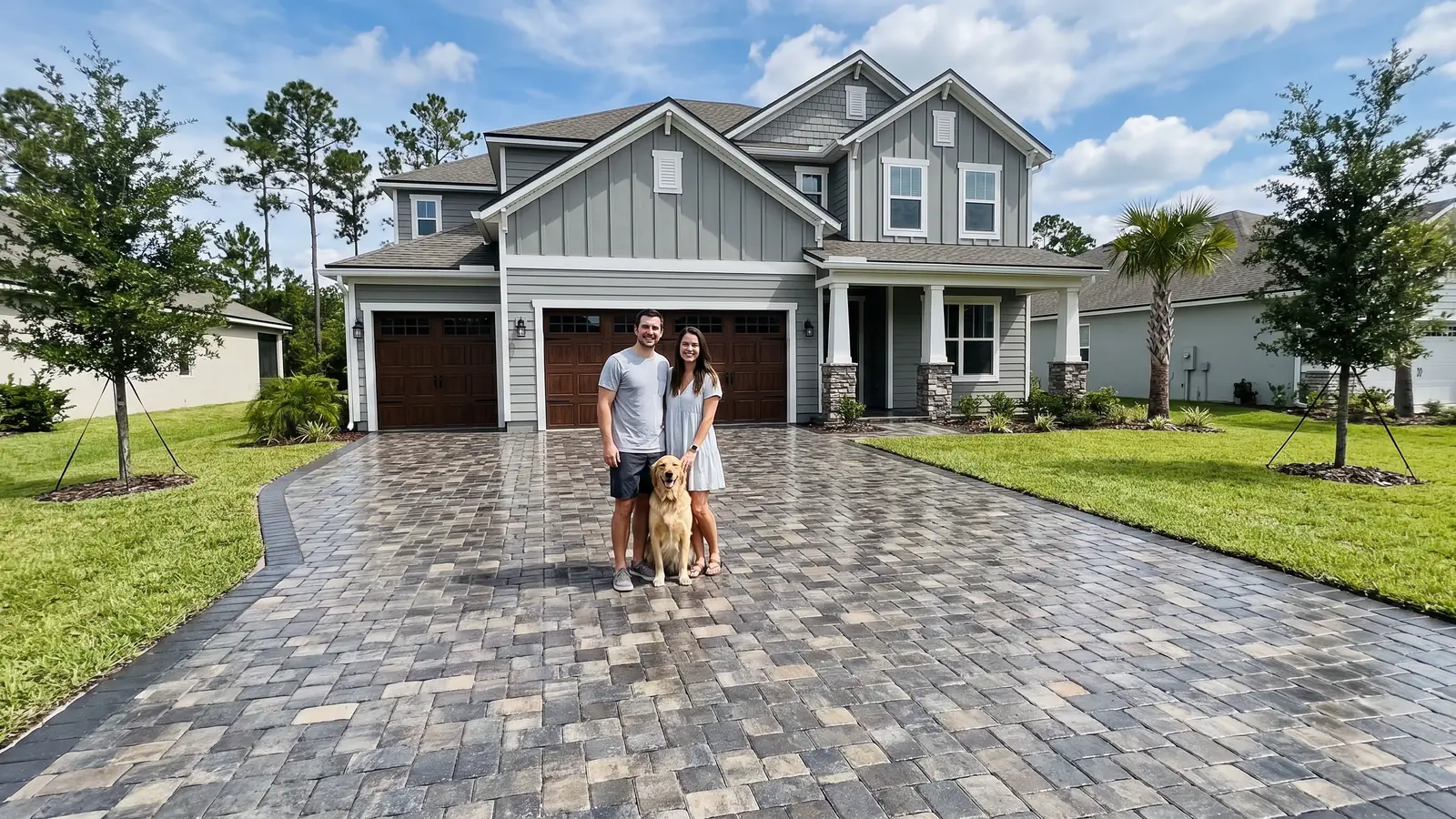
Sealing that respects natural stone around the pool
Travertine Sealing in St. Johns, FL
Keep travertine pool decks and lanais clean, grippy and sealed with a free estimate at (904) 552-3813.
- Brings out deeper paver color
- Fresh joint sand helps lock pavers in place
- Gives weeds less room to grow
- Makes the surface easier to keep clean
- Free estimate, no obligation
Request a Free Estimate
Free, no obligation.
Can a St. Johns contractor seal my travertine, and how soon?
Yes, a local contractor seals travertine pool decks, lanais and patios in St. Johns, FL, and you will hear back within 1 business day, usually much sooner. The estimate costs nothing, and saying no ends it. To talk about your stone today, call (904) 552-3813.
Picture honey colored travertine around the pool, dull in the spots where sunscreen and splash dry out each afternoon. Sealing clean, dry stone slows the next stain, and stone care companies say a penetrating sealer keeps the natural look and the grip underfoot. Tell the contractor about the pool, the cage and how often the deck gets wet when you request your free quote.
Why is travertine handled differently from concrete pavers?
It is full of tiny holes
Travertine naturally contains pores and voids, says MARBLELIFE of Northeast Florida, and that is why edges chip and spots pit. Dirt settles into those holes where a mop cannot reach. To have a contractor look at the pitting, call (904) 552-3813.
Acids etch it, sealed or not
Lemon juice, wine, vinegar and many bathroom cleaners etch travertine, according to a Florida stone restoration company, and a sealer slows staining without stopping etching. Honing and polishing are what remove etch marks. Ask about this before any cleaner touches your stone, and request your free quote.
Etching looks like dirt
The MARBLELIFE page notes that wear, etching and damage can pass for simple dirt, so a standard cleaner may not bring the stone back. A contractor who sorts dirt from damage first saves you a wasted wash. To book that look, call (904) 552-3813.
Concrete pavers follow other rules
A film-forming wet look coat is common on concrete pavers, and a Jacksonville guide says natural stone, travertine and brick cost 15 to 30 percent more than standard concrete pavers. The extra covers slower prep. For a number on your stone, request your free quote.
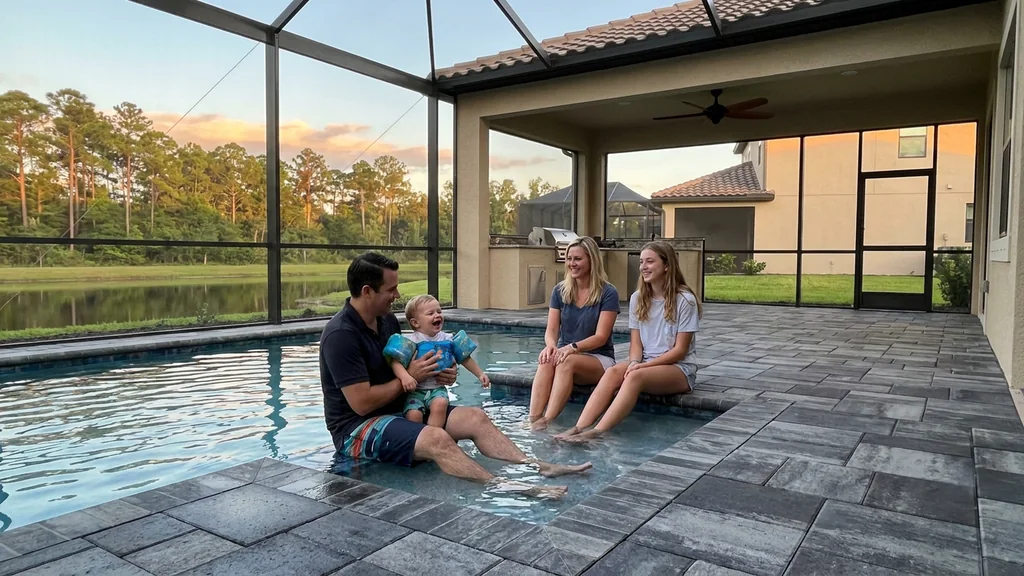
What wears on travertine around St. Johns homes?
Five things do most of the damage here, and a contractor checks for each one on the first visit. To find out which apply to your stone, call (904) 552-3813.
Sunscreen and pool water
A Florida stone care company says water, pool chemicals, sunscreen and UV break down topical coatings on pool decks. That is a heavy load on stone beside a screened cage.
Summer rain that lingers
A Florida stone restoration company reports that summer rain can keep outdoor stone wet for months. Damp stone grows mildew sooner and takes a sealer less willingly.
Iron in sprinkler water
UF/IFAS says most Florida well water is high in iron, and iron rich irrigation leaves orange streaks. Overspray onto pale stone shows within days.
Shade and tree cover
A St. Augustine power washing company says shaded properties with mature landscaping grow mold and algae faster. A St. Johns patio under big trees fits that description.
Humid air and mildew
A St. Augustine travertine installer points to a humid climate as a cause of staining, weathering and mildew on travertine.
Grit and foot traffic
MARBLELIFE lists seasonal moisture and grit tracked in by foot traffic as stressors in Northeast Florida. Pool decks and lanai doors get both.
Penetrating or topical: which sealer fits travertine?
Penetrating sealers soak in
A Florida stone restoration company recommends penetrating sealer for nearly all travertine, including patios and pool decks, because it leaves no film, lets moisture out and keeps the grip. A Lady Lake stone company uses a solvent based penetrating product. To compare products for your stone, call (904) 552-3813.
Topical coats sit on the surface
Film forming coats add shine, yet the same Florida company warns they can trap moisture, turn cloudy, get slick and peel, and calls them rarely right outdoors. That matters at a pool, where wet feet meet a glossy finish. If you like a wet look, say so when you request your free quote.
A grip additive is an option
A sealing company in St. Johns County lists a no-slip surface for pool decks, and a Gulf Coast company stirs a non-slip polymer into the third of its three coats. Ask whether a grip additive suits your deck. To raise it, call (904) 552-3813.
Color enhancers darken on purpose
Color enhancing sealers darken the stone deliberately. If the honey tone is what you love, ask for a test patch in a corner first. To arrange one, request your free quote.
How does a contractor tell it is time to reseal travertine?
Water on the stone tells the story
A Florida stone company describes placing coin sized puddles of water in busy and quiet spots and waiting 10 to 15 minutes. Beading means the sealer still works, and darkening means it has worn through. A contractor can run this check on a first visit, so call (904) 552-3813.
Outdoor stone runs on a short clock
That company puts outdoor patios and pool decks at about once a year, sometimes more, since Florida UV breaks sealer down. Tell the contractor when the last coat went on when you request your free quote.
Dull patches, dark spots and green film
Dull patches usually mean etching, dark spots mean absorbed stains and green film means moisture is lingering. Each points to a different fix. To get a read on yours, call (904) 552-3813.
How much does travertine sealing cost in St. Johns?
No St. Johns County company publishes a rate for travertine alone, so this page builds the range from published pieces. A St. Augustine company serving the county lists $1.50 to $3.00 per square foot for washing and sealing pavers, and a Jacksonville 2026 guide says natural stone costs 15 to 30 percent more than concrete pavers. To get a firm figure, request your free quote.
One Jacksonville restoration company lists about $1,800 to $2,600 for a natural stone pool deck, against $1,500 to $2,200 for a paver pool deck. Filling holes, honing and stripping failed coats are extra, and none of those had a published price. Bring up any repair when you call (904) 552-3813.
| Stone area | Paver wash and seal, county rate | Travertine, 15 to 30 percent more |
|---|---|---|
| 300 sq ft | $450 to $900 | $518 to $1,170 |
| 600 sq ft | $900 to $1,800 | $1,035 to $2,340 |
| 1,000 sq ft | $1,500 to $3,000 | $1,725 to $3,900 |
The middle column is the $1.50 to $3.00 per square foot a St. Augustine company serving St. Johns County published in November 2026. The right column adds the 15 to 30 percent a Jacksonville guide gives for natural stone. This is arithmetic from two published figures, not a quote for travertine, and local bids will vary.
Which St. Johns County towns can get a travertine quote?
Homeowners in St. Johns and the towns below can ask for a free price, and each town has a page of its own. If you are unsure your street is covered, call (904) 552-3813.
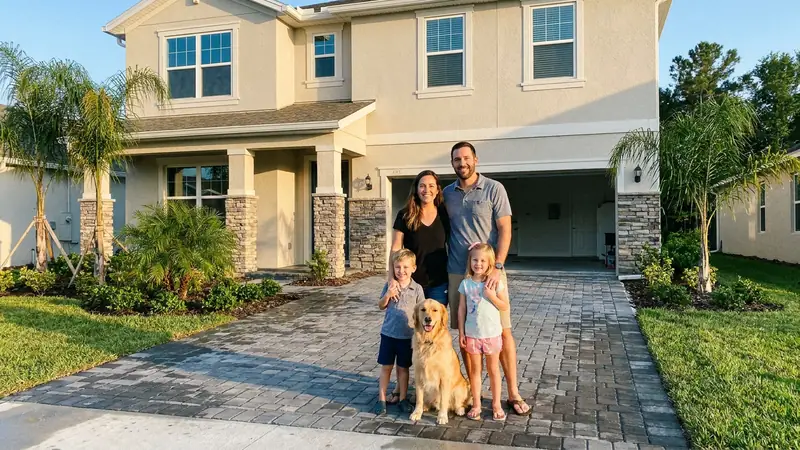
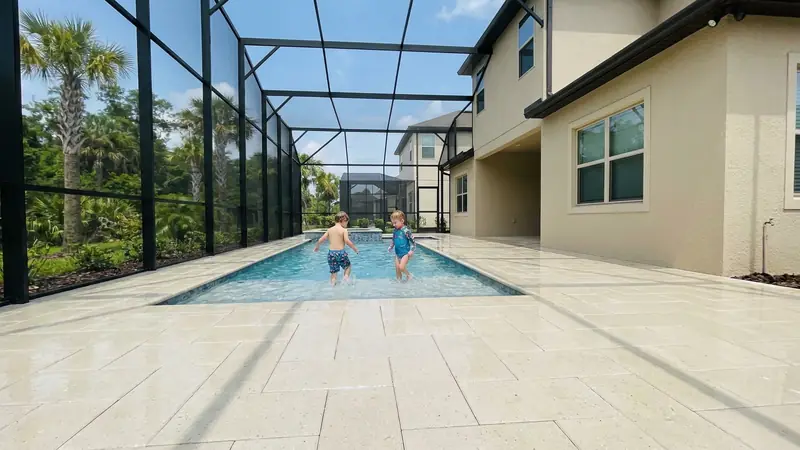
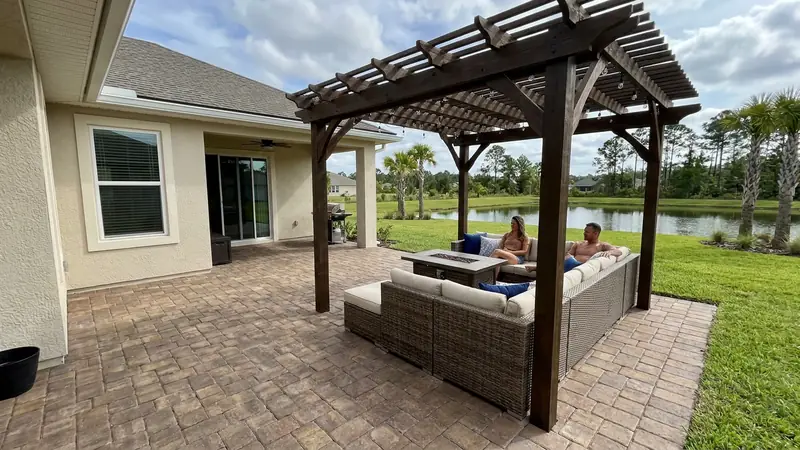
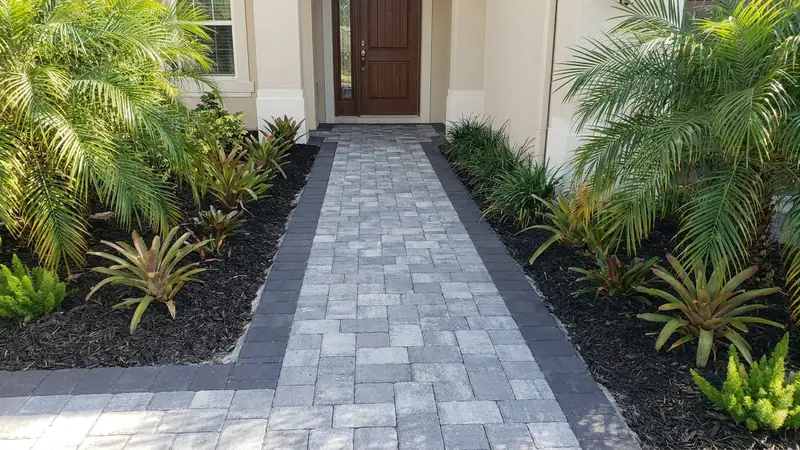
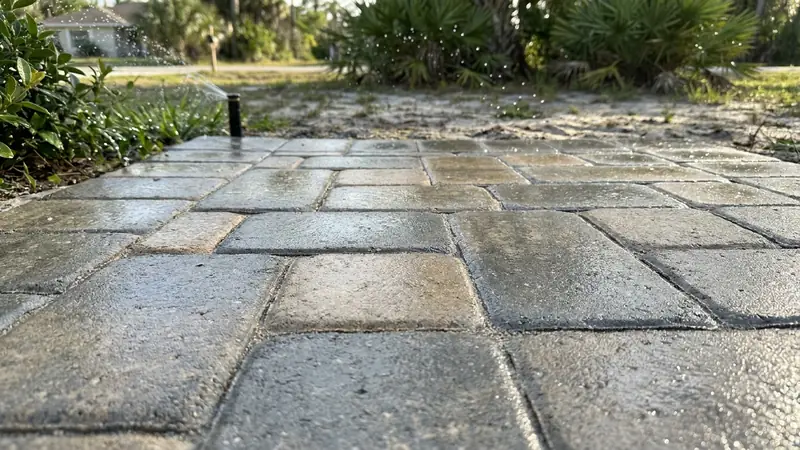
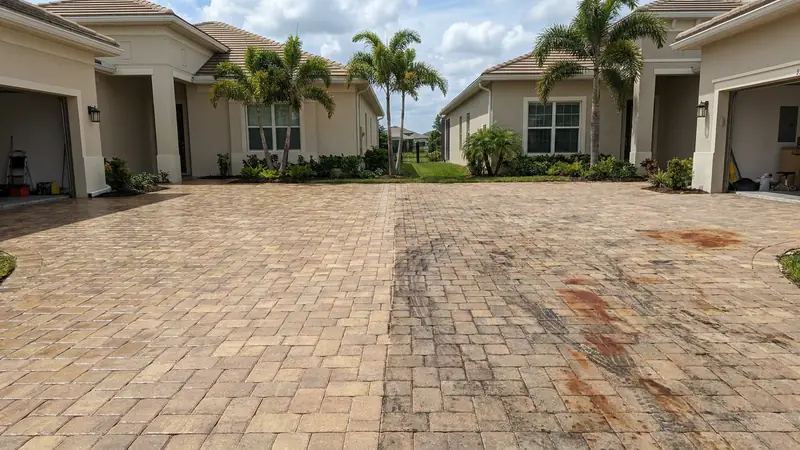
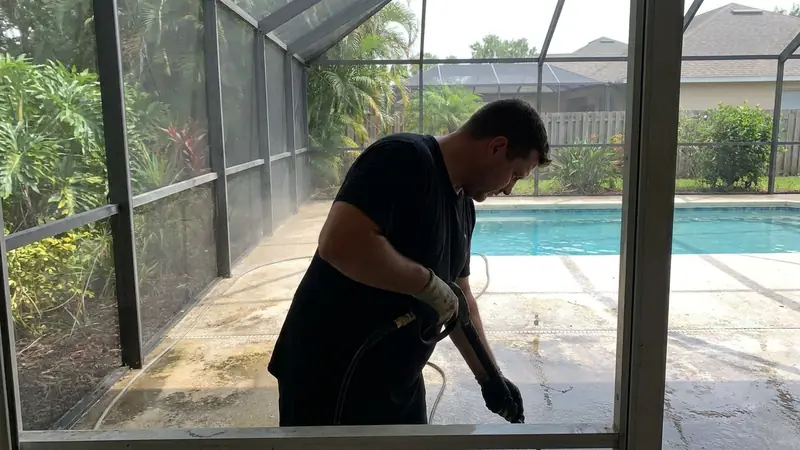
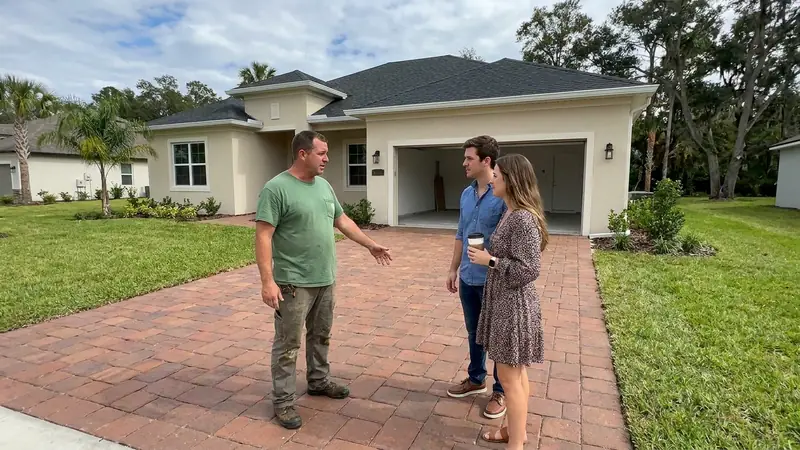
What does sealed travertine look like in St. Johns?
What is the travertine sealing process, step by step?
Most travertine jobs follow six steps, though a lightly worn lanai may skip a few. To see which steps your stone needs, call (904) 552-3813.
1. Look and test
The contractor walks the stone, notes holes, etching and old coatings, and checks how water behaves on it.
2. Strip anything failed
Old wax or a peeling topical coat comes off first, since a failed film cannot simply be sealed over.
3. Wash with stone-safe products
A pH-neutral cleaner works the stone and the grout lines. Near a screened cage, some companies use hot water extraction to avoid blowback.
4. Fill and hone
Open holes are filled with color matched epoxy and honed level, and etched areas are honed and polished.
5. Let it dry out
Outdoors, stone can need a day or more after rain, and sealer goes on only when the stone is fully dry.
6. Seal and review
Sealer goes on in even coats without leaving a film, and the contractor explains care and how long to keep off it.
Does the stone need filling, honing or stripping first?
Filling open holes
MARBLELIFE fills open holes with color matched buff epoxy and hones them level once cured. A fill that sits flush also keeps dirt from collecting in the hole. To ask about filling, request your free quote.
Honing etched or uneven stone
A Lady Lake stone company says honing levels uneven surfaces and lippage between tiles, and grinding removes deep scratches and failed coatings. That is restoration work, and it shifts the price. For a look at yours, call (904) 552-3813.
Stripping a failed film
A topical coat that has gone cloudy must be stripped before anything else goes on, while a penetrating sealer can be renewed over an older one once the stone is clean and dry. Which case you have decides the price. To find out, request your free quote.
Do HOA rules or a pool cage change a travertine job?
Cages limit the washing method
Pressure washing near a screen enclosure can blow debris around, so one Florida stone company uses a hot water extraction system built for screened enclosures. Describe your cage layout when you call (904) 552-3813.
Associations may care about the finish
Many St. Johns County homes sit in associations, and a switch from a natural look to high gloss is the kind of change a board may want to review. A penetrating sealer keeps the look close to what is there now. To plan around your rules, request your free quote.
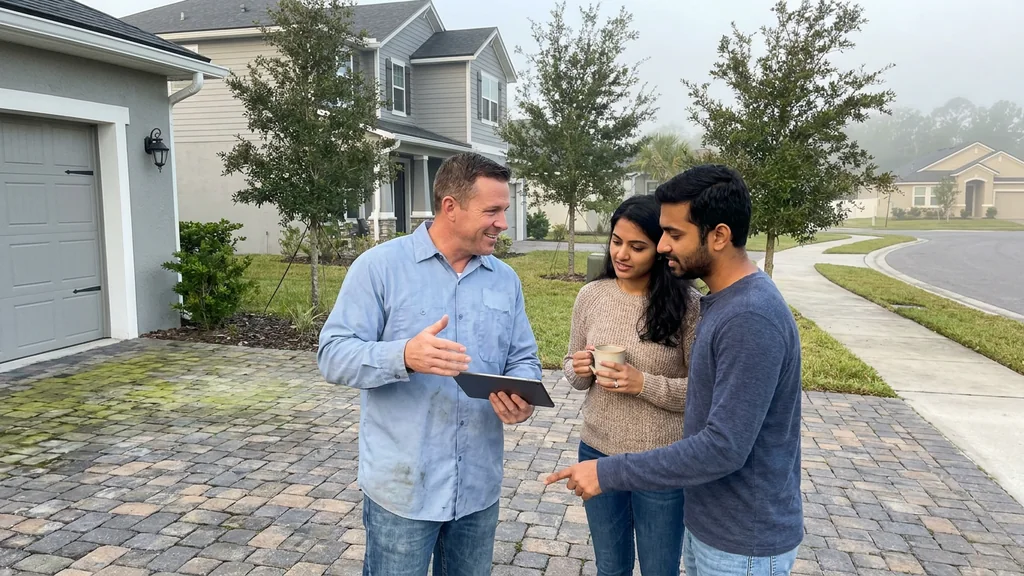
How long does a travertine job take, and when can the pool reopen?
A day for many lanais
One Gulf Coast travertine company puts its full process at 1 day and says pool use can resume within 24 hours, while a Jacksonville restoration company lists about 2 days for a pool deck. Expect a range, since weather moves both. To set a date, call (904) 552-3813.
Rain delays the coat
Because summer rain can keep stone damp, a careful contractor waits for dry stone instead of racing the afternoon storm. A one day delay beats a clouded coat. To plan around the forecast, request your free quote.
What are St. Johns homeowners asking about travertine?
Which paver sealer is best for Florida?
There is no single winner, so ask the contractor what goes on your stone and why. A Florida stone restoration company recommends a penetrating sealer for nearly all travertine, patios and pool decks included. Concrete pavers are different, and many contractors use a film-forming coat on those.
How much does it cost to seal travertine pavers?
No St. Johns County rate for travertine alone is published. A St. Augustine company serving the county lists $1.50 to $3.00 per square foot for washing and sealing pavers, and a 2026 Jacksonville guide adds 15 to 30 percent for natural stone. That works out to roughly $1.73 to $3.90 per square foot. Hole filling and honing cost extra.
Should pavers be sealed in Florida?
Usually yes. A Florida travertine company says unsealed stone holds water for long periods, which feeds mold and mildew, and a Florida stone restoration company says strong UV breaks sealer down outdoors. Sealing slows staining and gives the stone a protective layer, though it needs renewing.
What is the average cost to seal pavers in Florida?
A St. Augustine company serving St. Johns County lists $1.50 to $3.00 per square foot for its full wash and seal package, while a 2026 Jacksonville guide lists $1.25 to $3.25. Small jobs run higher per square foot than large ones. A free estimate gives the real number for your stone.
How often should outdoor travertine be resealed in St. Johns?
About once a year for outdoor patios and pool decks, sometimes more often, according to a Florida stone restoration company. Indoor stone lasts two to three years. Florida sun, long wet spells and pool water all shorten the life of a coat.
Can acidic cleaners hurt travertine by a St. Johns pool?
Yes. Lemon juice, wine, vinegar and many bathroom cleaners etch travertine, and a Lady Lake stone company says acidic cleaners strip the natural finish and speed up damage. A contractor uses pH-neutral products and hones etched spots.
Will sealer make travertine slippery around the pool?
A film-forming coat can turn slick, which is why stone companies rarely recommend one outdoors. A penetrating sealer keeps the stone's natural grip. A St. Johns County sealing company lists a no-slip option for pool decks, and a Gulf Coast company mixes a non-slip polymer into its third coat.
Can a contractor seal over a peeling travertine coat?
Not if the old coat is a topical film. A Florida stone restoration company says a failed film has to be stripped first. A penetrating sealer can be renewed over an older one once the stone is clean and dry.
How long does travertine sealing take?
A Gulf Coast travertine company puts its full process at 1 day, and a Jacksonville restoration company lists about 2 days for a pool deck. Weather moves both numbers. Stone also has to dry fully before sealer goes on.
Do I need to fill the holes in my travertine before sealing?
Often, yes. Travertine naturally contains pores and voids, and MARBLELIFE of Northeast Florida fills open holes with color-matched epoxy and hones them level. Sealing over open holes leaves dirt trapped in them.
Ready to protect your travertine?
Call or send a short request about your pool deck or lanai, and a reply follows within 1 business day, usually much sooner.
Free, no obligation